
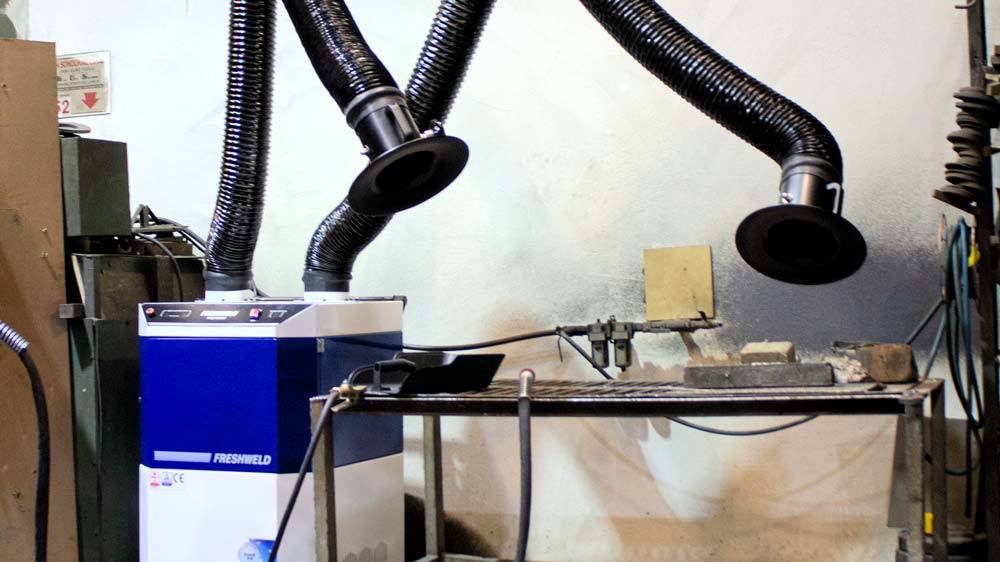
Fume extraction arms are a critical component of fume capture and filtration systems. They can be positioned directly at the source of hazardous fumes, providing the operator with the closest line of defense and a reliable assistant. These arms can be easily mounted on central systems or mobile extraction units. Depending on the suction power and system design, their reach can vary from 2 meters to 7 meters.
During industrial production processes, toxic gases must be captured and filtered before they reach the worker’s breathing zone. One of the most crucial factors in ensuring worker health and environmental safety is the correct positioning of fume extraction arms.
 How to Correctly Use and Position Fume Extraction Arms
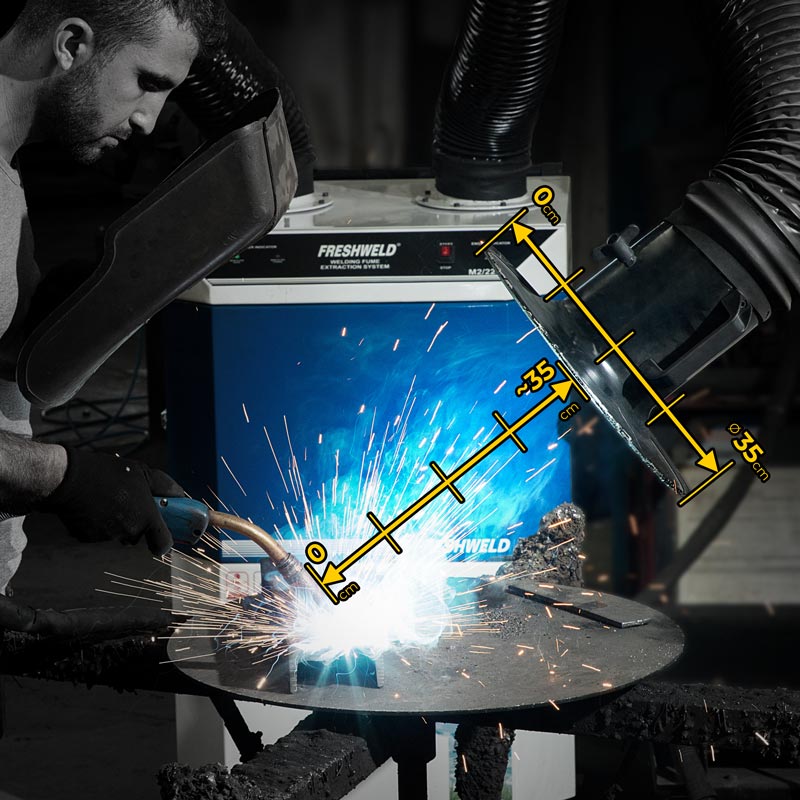
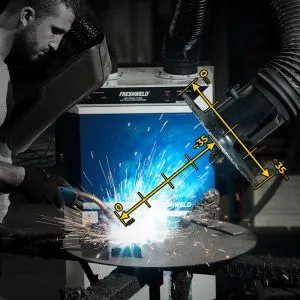
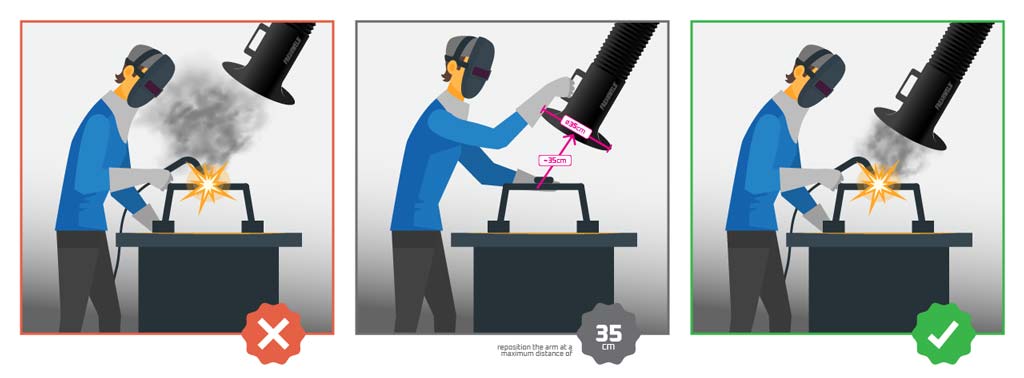
- The optimal distance between the extraction arm and the fume source should be equal to the diameter of the hood at the end of the arm. For example, FRESHWELD extraction hoods are 35 cm in diameter, so maintaining an average distance of 35 cm between the fume source and the hood maximizes capture efficiency, regardless of arm length or suction power.
- Placing the hood too close may obstruct work, while positioning it too far reduces capture efficiency. Ensure there are no obstructions between the fume source and the hood.
- Whenever possible, position the arm directly in front of the operator. This improves both worker safety and overall suction performance.
- For dual-arm extraction units, use the damper valve to close off suction to the unused arm, concentrating power where it is needed.
- Extraction arms connected to central systems should also be positioned following these same guidelines.
For more information and tailored solutions, or to request a quote, contact our sales team today.
Correct positioning of fume extraction arms not only improves workplace air quality but also enhances compliance with HSE and ISO occupational safety standards. When combined with high-efficiency filtration units, it contributes to healthier, safer, and more productive work environments.