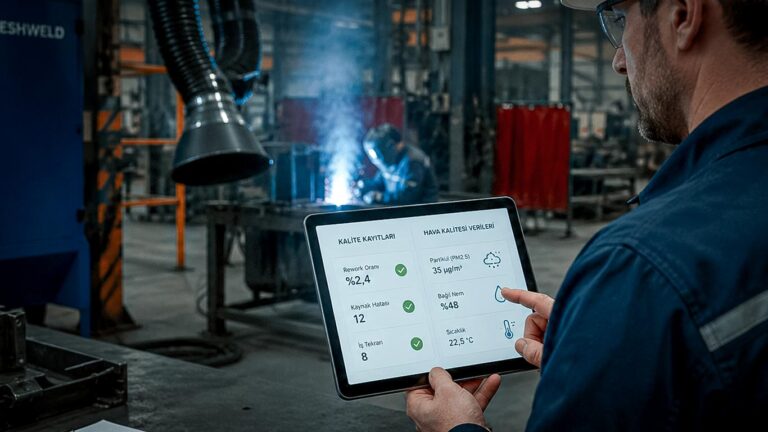
How Environmental Conditions Affect Welding Rework Rates and Quality Performance
Discover how welding fumes, humidity, airflow, and workplace conditions affect welding rework rates, weld quality, and production efficiency.

Discover how welding fumes, humidity, airflow, and workplace conditions affect welding rework rates, weld quality, and production efficiency.
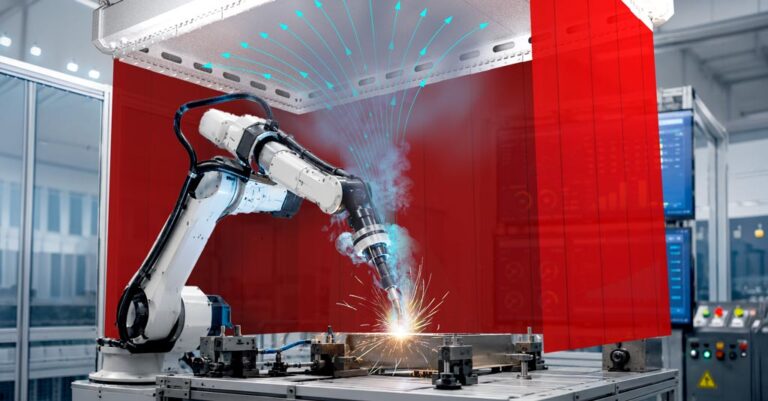
Robotic welding fumes can increase maintenance costs and unplanned downtime in robotic welding cells. Discover how the Maintenance 4.0 approach, robotic extraction hoods, and filtration systems contribute to production efficiency.

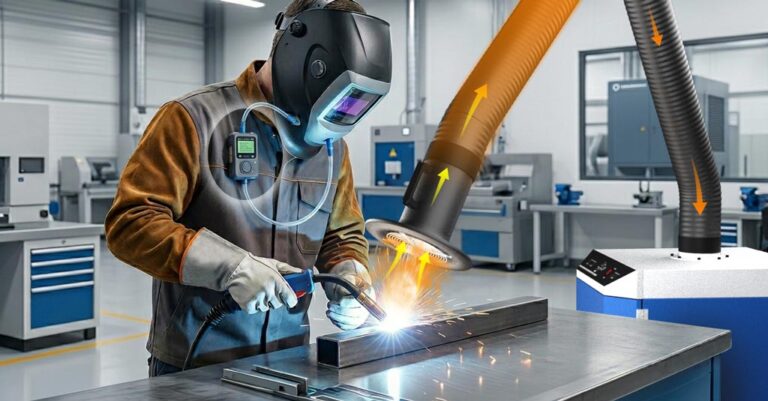
Learn how welding fume exposure is measured, monitored, and controlled through personal sampling, air quality testing, exposure limits, and fume extraction systems.

Health, Safety and Environment (HSE) regulations require mechanical ventilation systems in industrial workplaces to remove toxic gases, fumes, and dust effectively.

Laser welding fume can be filtered by up to 95% with advanced extraction systems, making laser welding ideal for industrial applications that demand precision and high-quality results.

Welding training workshops are equipped spaces where welders can enhance practical skills and learn welding techniques. Safety and equipment quality are fundamental.

Choosing between cobots and robots in welding applications is a critical decision for HSE experts, plant managers, and production leaders to ensure efficiency and safety.

However, the use of these machines brings responsibilities for worker and environmental health. Oil vapor filtration in CNC machines not only..

Welders who work with these materials may face asbestos exposure risks, especially when the materials are damaged or disturbed during the welding process.