
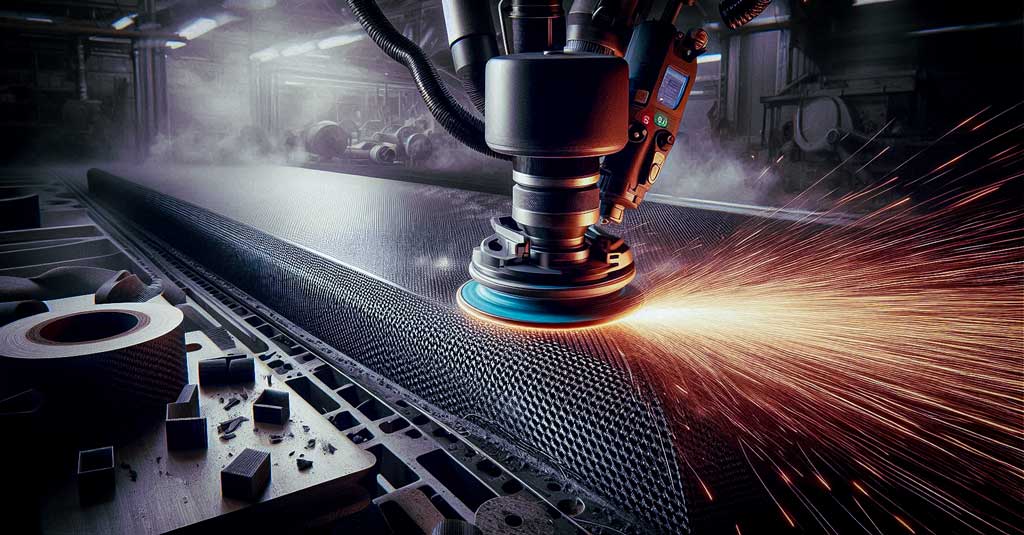
Composite materials are created by combining two or more substances to achieve superior properties, and during composite machining they are commonly manufactured from carbon fiber reinforced with resin.
WHAT IS A COMPOSITE MATERIAL?
- Carbon Fiber Reinforced Plastics = CFRP
- Glass Fiber Reinforced Plastics = GFRP
Carbon Fiber Reinforced Plastics (CFRP)

Carbon fiber reinforced plastics (CFRP or CRP) are strong, lightweight, and high-cost composite materials. Carbon fibers provide structural strength, while epoxy is the most commonly used polymer matrix—though polyester, vinyl ester, and nylon are also used in certain applications.
Kevlar and aluminum structures are often combined with carbon and glass fibers for additional reinforcement. Graphite reinforced polymers (sometimes referred to as GFRP) are also used, though the term can cause confusion with glass fiber composites. In some contexts, they are simply referred to as graphite fiber composites.
CFRPs are widely used in aerospace and automotive applications, where strength-to-weight ratio is critical. They are also increasingly used in yachts, bicycles, and motorcycles, as well as in consumer products like laptops, fishing rods, archery equipment, rackets, stringed instruments, and golf equipment, thanks to advances in production technology and reduced costs.
Glass Fiber Reinforced Plastics (GFRP)

Fiberglass, or glass fiber reinforced plastic (GFRP), is a composite made from completely different raw materials. Classified as a glass yarn, fiberglass is produced from a combination of limestone, magnesium, and aluminum. Much of it is derived from recycled glass, processed into thin fibers. Thanks to its durability and strength, fiberglass is widely used in industries such as aerospace and construction.
It is lightweight, resistant to deformation, and highly durable, which provides long-term usability. Its lower production costs also make it a preferred alternative to many other materials.
Hazardous Chemicals Released During Production and Composite Machining
Carbon fibers are produced through oxidation, carbonization, surface treatment, and coating processes, and then shaped in molds. After curing, excess material and surface defects are removed through composite grinding.
In fiberglass production, molten glass is extruded into fine filaments. During this process, toxic vapors are released into the air. The fibers are then combined with chemicals depending on the intended application.
During production and especially grinding or trimming, large amounts of fine, flammable composite dust are released. Unlike metal machining swarf, composite dust is much harder to extract and dispose of.
If not properly filtered and contained, this dust can enter the respiratory system and cause severe health risks.
Effective dust extraction requires not only traditional fume extraction systems, but also specialized equipment with high airflow capacity and enclosed dust collection bins. Site-specific engineering analysis is crucial during system design.
Contact Our Technical Team and Let's Choose the Right Product Together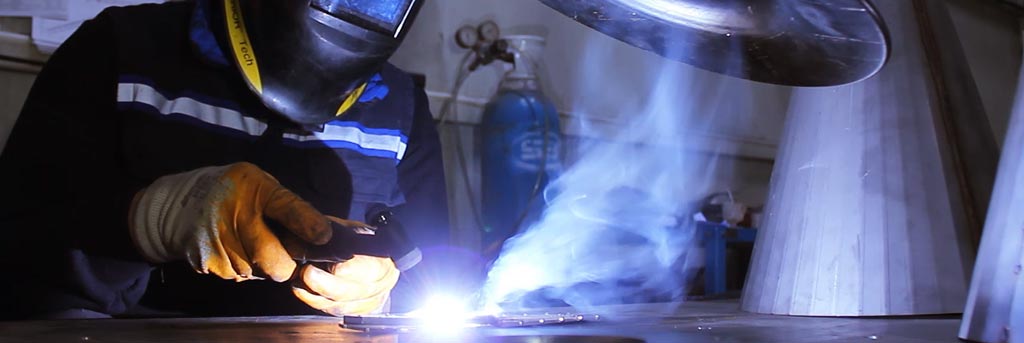
HOW SHOULD COMPOSITE DUST FILTRATION BE DONE?
- The use of composite materials in place of metals is rapidly increasing across industries.
- Machining composites generates highly airborne and flammable fine dust particles.
- Fine composite dust can easily reach the lungs through the respiratory tract, posing serious health hazards.
- Skin contact with fiberglass or carbon fiber dust may also cause dermatological issues.
- Unlike metal dust, composite dust is more difficult to collect and filter. FRESHWELD provides effective solutions for these challenges.
- Cross-draft extraction systems and modular suction walls are highly efficient solutions for composite dust control.