


Manganese exposure is classified as an occupational disease when a clear cause–effect relationship can be established between exposure to a harmful factor and health issues arising specifically from the nature of the work performed.
In legislation, it is defined as: “A temporary or permanent illness, physical or mental disorder caused by repeated exposure due to the nature of the insured’s work or working conditions.” (Social Insurance and General Health Insurance Law No. 5510).
As the definitions show, occupational diseases are strongly linked to workplace-specific risk factors. They usually result from a single causal agent, have distinctive clinical patterns, and occur more frequently among workers in the same profession.
Manganese and its metabolites can be detected in biological systems, can be reproduced experimentally, and symptoms typically appear after a silent latency period following initial exposure.
WHAT IS MANGANESE? CHARACTERISTICS AND SOURCES OF EXPOSURE
Manganese (Mn) is a reddish-gray hard metal. Its compounds exist in various oxidation states (+2, +3, +4, +7) and forms such as MnCl2, KMnO4, MnSO4, MnPO4, MnO2, Mn3O4.
About 90% of manganese consumption is in the steel production industry. It is used to harden iron alloys and is a component of welding electrodes. Ferromanganese contains ~65% Mn, and manganese steel contains 10–14% Mn.
Other applications include paints, glass, ceramics, textiles, lithium batteries, pesticides (e.g., Maneb), fertilizers, wood preservatives, and leather processing.
High occupational exposure occurs in mining, refining, steel production, and welding processes. It can also be present in fuels such as gasoline and jet fuel (MMT additive).
Although manganese is an essential trace element for normal bone development, the human body only contains about 12–20 mg.
MECHANISM OF MANGANESE EXPOSURE
The primary route of exposure is inhalation of dust and welding fumes. Since manganese is insoluble in water, it reaches the alveoli as fine particles. Gastrointestinal absorption is limited, while inorganic compounds do not penetrate the skin—although certain organic compounds may.
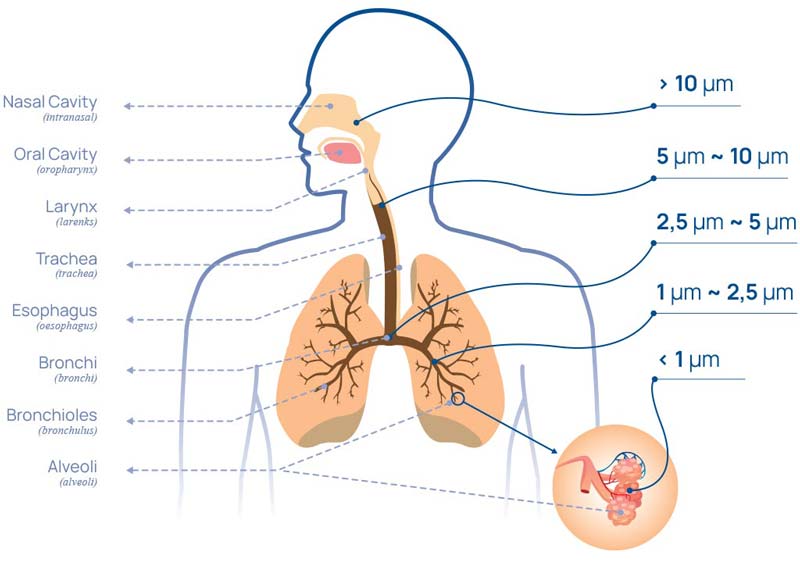
Absorbed manganese rapidly enters the bloodstream, spreading to tissues, particularly the liver, kidneys, intestines, endocrine organs, and bones. It can cross the blood-brain barrier and placenta, accumulating in mitochondria-rich organs, retina, pigmented tissues, and dark hair.
Its biological half-life is 36–41 days, but clearance from the brain is much slower.
RECOMMENDED EXPOSURE LIMITS
- OSHA Permissible Exposure Limit (PEL): 5 mg/m³
- California OSHA: 0.2 mg/m³
- NIOSH Recommended Exposure Limit (REL): 1 mg/m³
- In 2016, the U.S. reduced the exposure threshold to 0.02 mg/m³ due to neurological risks.
HOW TO REDUCE MANGANESE EXPOSURE FOR WELDERS?
The best way to reduce manganese exposure is to minimize overall welding fume exposure, as fumes also contain beryllium, hexavalent chromium, nickel, and other toxic metals.
Key solutions include:
– Using robotic welding cells to isolate fumes from the workplace environment.
– Ensuring ventilation and filtration systems are properly sized for welding fume volumes.
– Installing ambient air filtration units to capture and recycle clean, filtered air.
– For manual welding operations, using efficient fume extraction systems that keep fumes away from the welder’s breathing zone, such as:
- Fume extraction torches
- Extraction arms
- Backdraft or sidedraft tables
Depending on capture efficiency, a secondary ambient air filtration system may also be recommended.
Additional measures: adopt wet methods, enclosed processes, local exhaust ventilation, general ventilation, proper respiratory protection, and workplace signage.
For more details and customized project planning, feel free to contact us. At FRESHWELD, we prioritize human health by delivering safe and effective solutions for welders and industries.
Source: Ministry of Labor and Social Security – Occupational Health and Safety Directorate
Guide on Occupational and Work-Related Diseases