

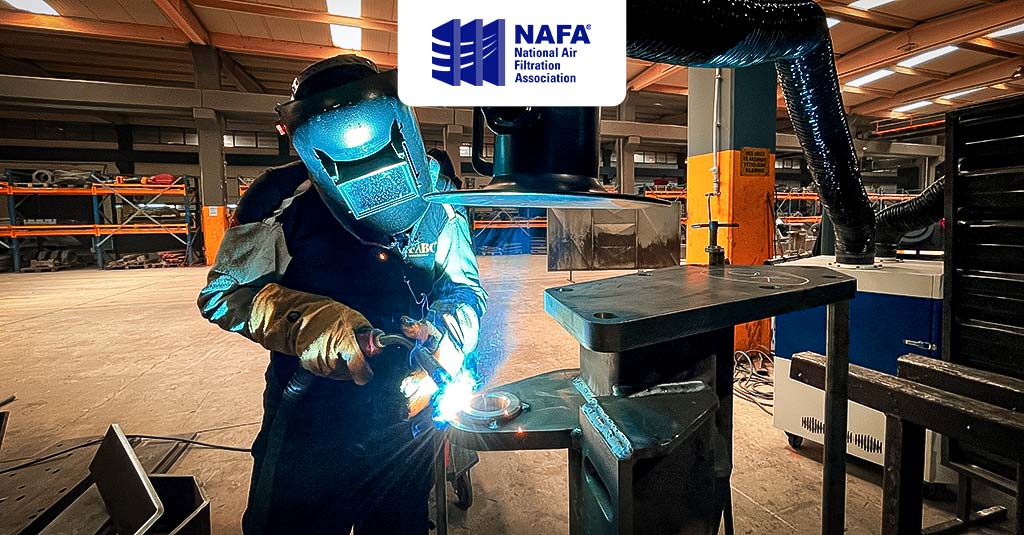
For welding operations, air cleaning methods are typically implemented through exhaust systems or general air purification systems, both of which may be part of a comprehensive welding fume capture process.
Welding Fume and Dust Capture
Using welding fume extraction systems is one of the most effective ways to collect welding dust at the source. These systems capture airborne contaminants directly from the production point and remove them from the operator’s breathing zone faster than natural air dispersion.
Mobile, stationary, or portable fume extraction systems generally consist of the following key components:
- Fume extraction hood,
- Ducting system,
- Air filter (filtration unit),
- Fan (for high suction power), and
- Exhaust outlets.
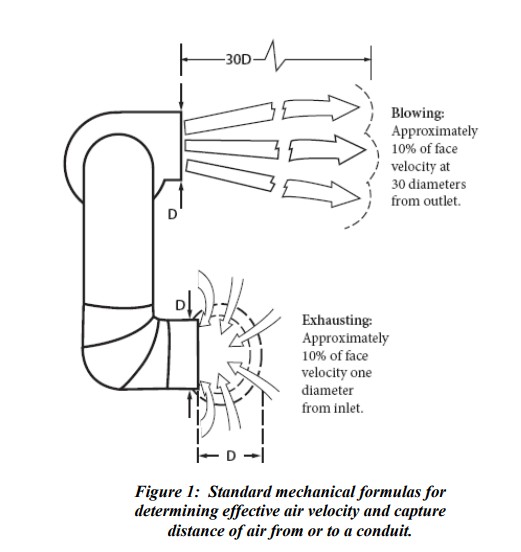
Each element should be specifically designed for the intended application. However, the distance between the capture hood and the fume source should typically not exceed one duct diameter to ensure maximum extraction efficiency.
Recommended NAFA Air Cleaning Methods
Exhaust Air Removal Method
Exhaust systems involve the direct removal of air containing welding fumes and molecular contaminants from the workspace.
While this method may seem cost-effective, it can pollute the external environment and violate governmental regulations, negatively impacting air balance. It can also create the need for additional heating, cooling, and ventilation systems within the facility.
As a result, while local exhaust methods may appear economical, they can ultimately be more expensive compared to general air cleaning or source-capture filtration systems.
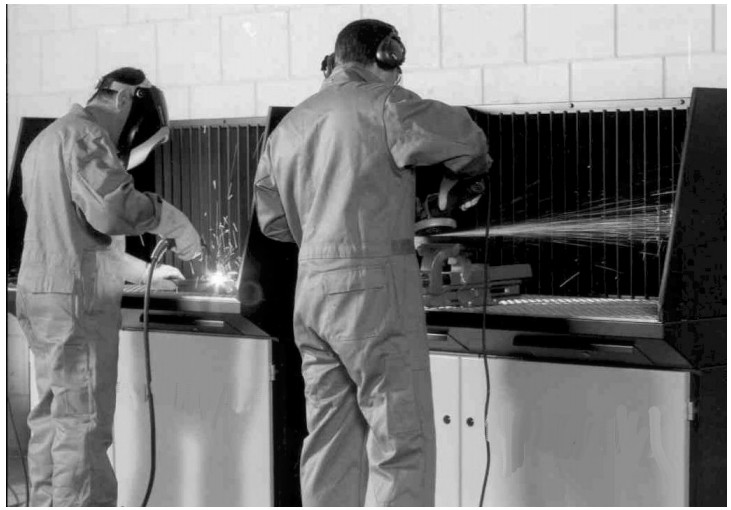
Exhaust air systems are designed with large suction fans that draw contaminated air upward and expel it outside the facility. These setups may include a fume hood, welding table, or enclosure designed to efficiently pull contaminated air away from the operator. Specialized extraction arms or hoses are often positioned near the welding zone to capture fumes and gases directly at the emission point.
Recirculated Exhaust Air
Exhaust air from welding processes can be safely recirculated into the workspace under the following conditions:
- The air meets the exposure limits defined by local or international regulatory authorities.
- The exhaust air is cleaned using a high-efficiency filter—MERV 16 or better (according to MIL Std., HEPA filters provide 99.97% filtration efficiency).
- Any gases not captured by molecular filtration remain below acceptable concentration levels.
For detailed information or to request a custom solution tailored to your application, please contact our sales representatives.
For more information, visit the official NAFA website.
 NAFA – National Air Filtration Association
NAFA (National Air Filtration Association) is an international organization that promotes quality, safety, and best practices in the air filtration industry. Its primary mission is to improve indoor air quality and establish high standards in air filtration systems.
Purpose of NAFA
NAFA aims to enhance the performance of air filtration systems used in both commercial and industrial sectors. It educates users about proper filtration methods and provides its members with technical guidance, educational materials, and certification programs to promote professional standards across the industry.
NAFA Standards
Working closely with organizations such as ASHRAE, NAFA publishes various technical guidelines and recommendations for the classification, testing, and application of air filtration systems. Its standards focus on energy efficiency, filter lifespan, and indoor air quality (IAQ).
NAFA also contributes to industry knowledge through resources like the “NAFA Guide to Air Filtration” and certification programs such as the NAFA Certified Technician (NCT), supporting professional development and expertise in air filtration practices.