
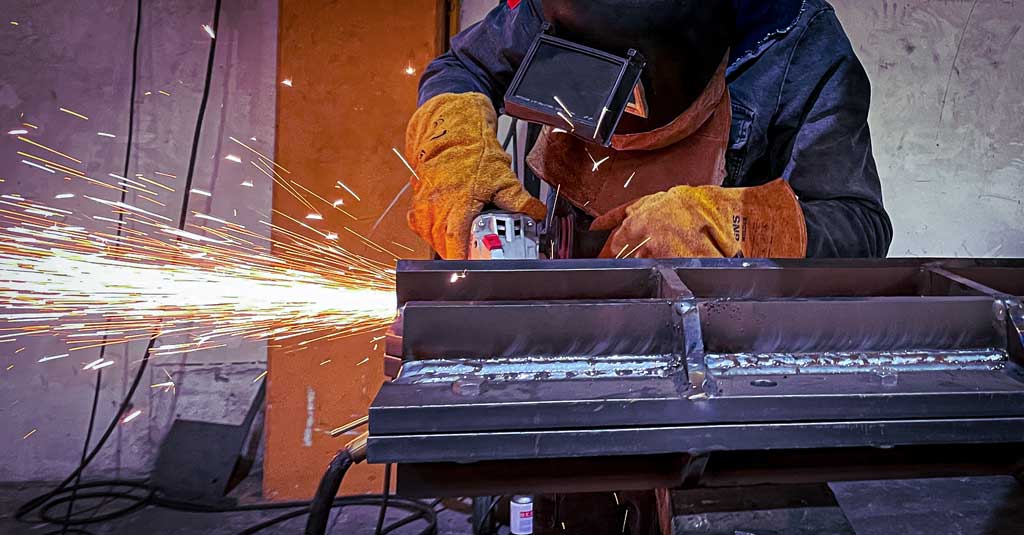
Types of Grinding Deburring Methods
 Surface Grinding:
A process where uneven material surfaces are leveled using a cylindrical grinding wheel. Effective for flat parts, similar to rolling concrete surfaces, but achieved by material removal.
 Cylindrical Grinding:
Similar to turning operations. A rotating cylindrical wheel removes material from the slowly rotating part surface, providing precise results.
 Centerless Grinding:
Provides high precision machining for cylindrical parts without clamping. Two rotating wheels move in the same direction, while support fixtures control depth and rotation.
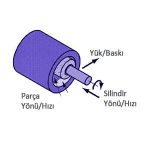 Internal Grinding:
Mainly applied in tube-shaped materials, where a small wheel removes material inside the bore. A variant of cylindrical grinding.
 Edge Grinding:
Involves machining flat workpieces with the side of a cylindrical wheel. Particularly useful for small components.
 Thread or Groove Grinding:
Used to produce grooves and threads on cylindrical parts with high precision.
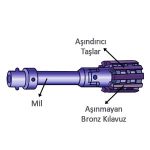 Honing:
An abrasive machining process that improves surface texture and geometry. Commonly used for engine cylinders, gears, and hydraulic components.
 Lapping:
Low-speed abrasive process used to achieve high accuracy, flatness, and fine surface finishes.
 Ultrasonic Grinding:
Uses ultrasonic vibrations and abrasive slurry to erode material surfaces with high precision.
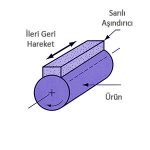 Polishing and Buffing:
Uses abrasive dust embedded in belts or cloth surfaces. Performed with or without lubricants to improve surface finish.
DUST GENERATION AND COLLECTION DURING GRINDING
The dust generated as a result of the above-mentioned operations can pose serious risks to both human health and environmental safety, potentially leading to fatal consequences. Although many types of dust may appear harmless at first glance, they can create significant hazards over the long term. The fire and explosion risks associated with dust must always be anticipated and appropriate preventive measures should be taken. The fact that no fire or explosion has occurred in your grinding operation so far does not guarantee that such incidents will not occur in the future. Dust can easily ignite or explode, especially when it accumulates in certain areas. In grinding operations, sparks generated during the process or unexpected static electricity discharge can act as ignition sources. Therefore, fire and explosion hazards should be assessed separately, and effective control measures should be implemented for both risks.

Explosion Risk
Explosion risks can often be predicted in advance based on the type of material being ground, and appropriate precautions can be implemented through solutions that comply with ATEX directives . In this way, if an explosion occurs, the explosion pressure can be safely vented or directed, minimizing potential damage to personnel, equipment, and the surrounding environment.

Fire Riski
A properly designed dust collection system, equipped with the right components and safety features, can significantly reduce—and in many cases eliminate—the risk of fire. Fires in dust collection systems are often caused by excessive dust accumulation in certain areas of the system. To prevent this, extraction hoods must be properly designed and positioned to effectively capture dust at the source before it has the opportunity to settle and accumulate. Proper airflow design and regular system maintenance are also essential to maintaining safe operating conditions.