

Definition of Problem


Capturing Welding Fume Alone Is Not Enough
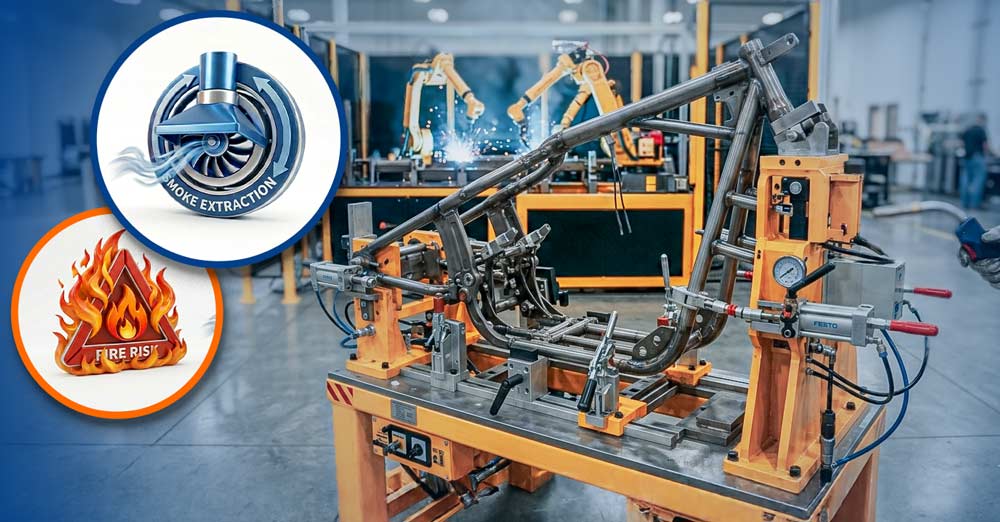
During high-volume welding operations performed on welding fixtures, welding fumes, hot particles, and sparks directly affect not only worker health but also equipment safety, fire risks, and production continuity.
Especially in production lines where robotic and manual welding processes operate together, effective control of welding fumes has become a critical requirement. Fine metal particles and hot debris generated during welding reduce workplace air quality while simultaneously creating potential safety hazards within extraction ducts and filtration systems.
One of the primary challenges faced by many manufacturing facilities is maintaining high fume extraction performance while ensuring overall system safety. Inadequate filtration solutions reduce operator comfort, whereas uncontrolled spark transportation can significantly increase fire risks.
For this reason, modern welding operations require more than a conventional welding fume extraction system. They require an integrated process safety solution that simultaneously protects worker health, equipment, and operational continuity.
Engineering Design & Solution Process
Designing High-Performance Fume Extraction with Safe Filtration
One of the greatest engineering challenges in welding fume control projects is maintaining high extraction efficiency while safely managing hot particles and spark hazards. The solution developed for this project is based on capturing welding fumes directly at the source, transporting them safely through the ductwork, and filtering them with high efficiency.Source Capture Strategy
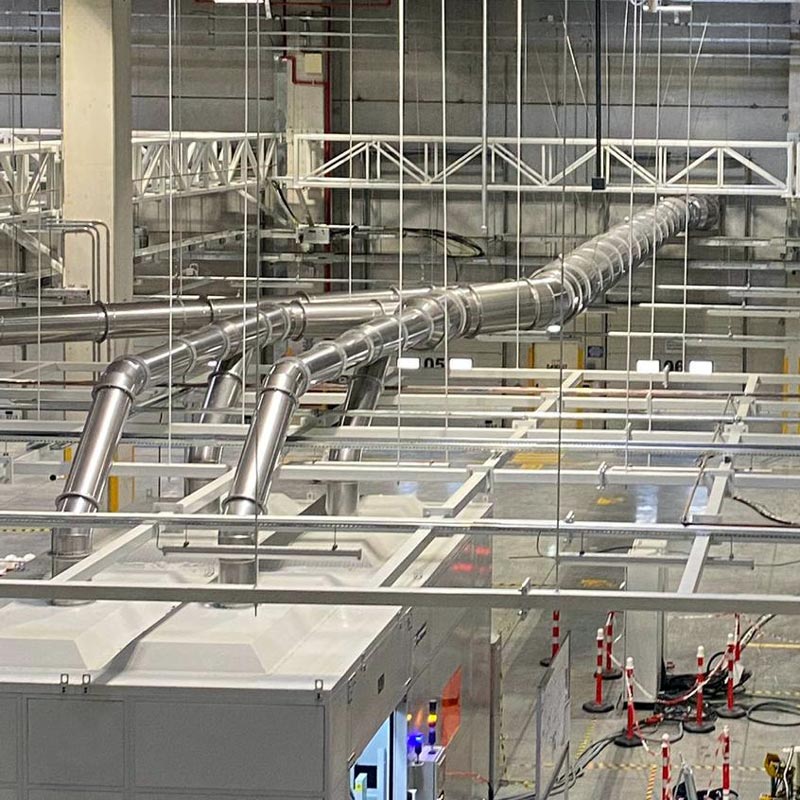
Dedicated extraction points were designed for manual welding stations on welding fixtures, robotic welding cells, and grinding stations within the finishing area.
This approach captures welding fumes before they disperse into the working environment, significantly reducing employee exposure to airborne particulate matter.
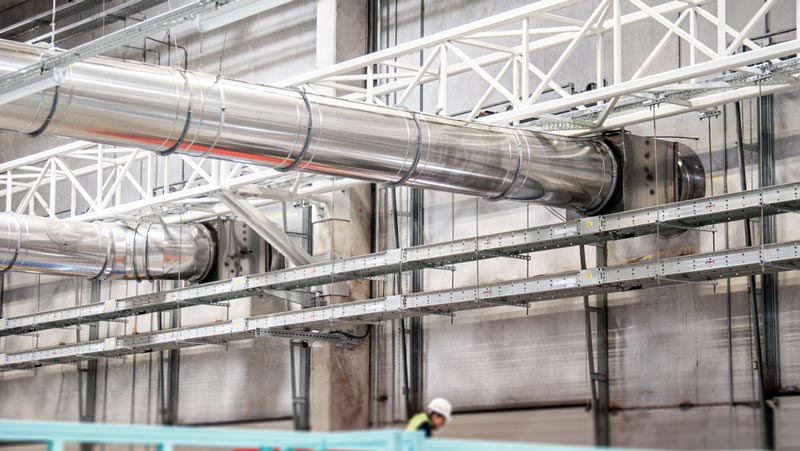
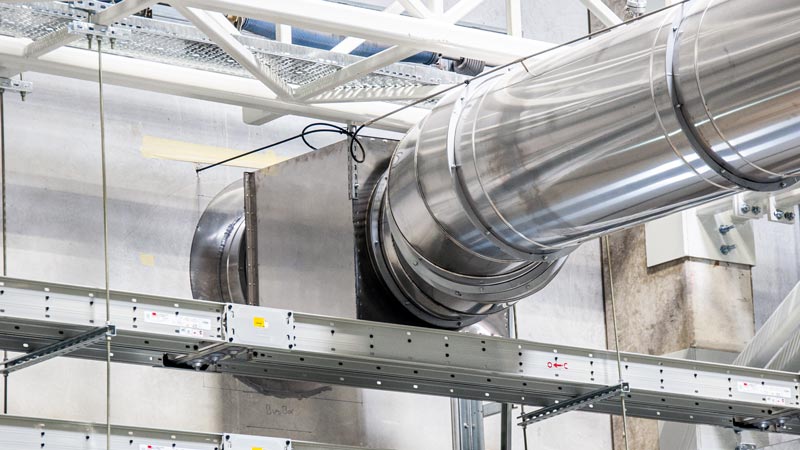
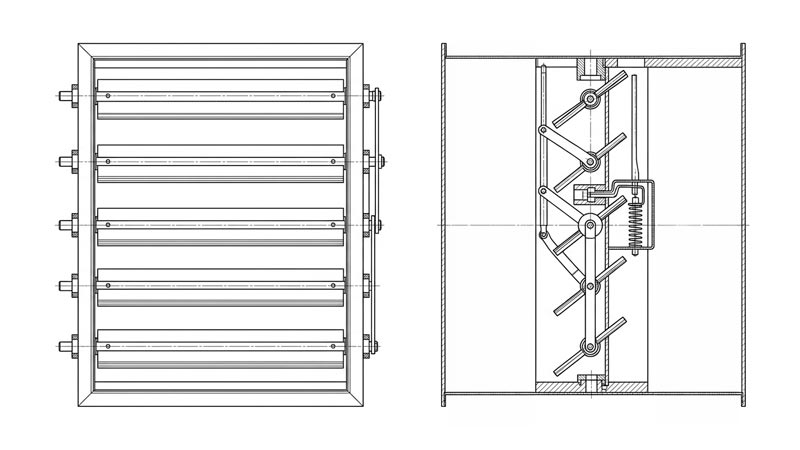
Additional Protection with Fire Dampers
Fire dampers and temperature monitoring equipment integrated into the system are designed to automatically place the system into a safe operating mode whenever abnormal temperature conditions are detected.
This configuration creates additional safety barriers between the production area and the filtration system while preventing potential hazards from spreading throughout the system.
IDRODUST SERIES
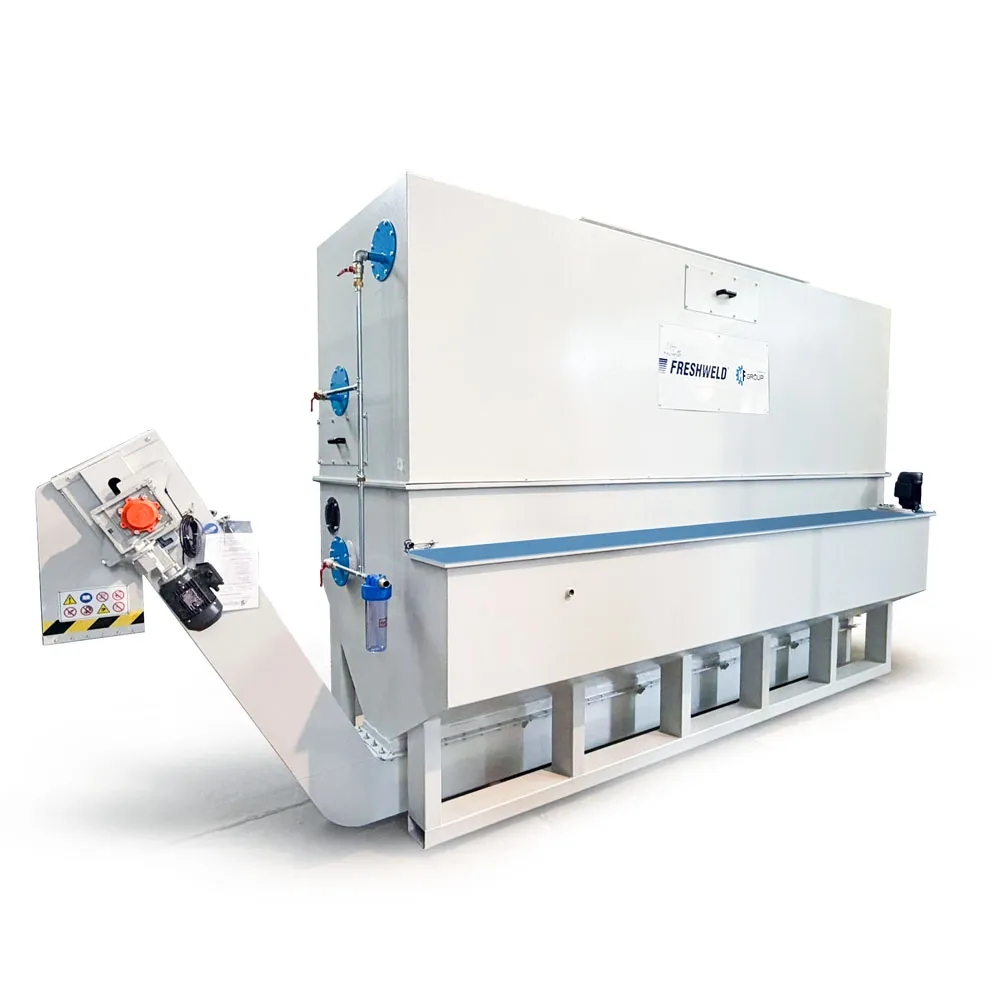
Hydrodynamic Dust Collection, Dust Suppression and Dirty Air Scrubbing (Wet Scrubber) Filter System with Sludge Scraper – IDRODUST Compact VD
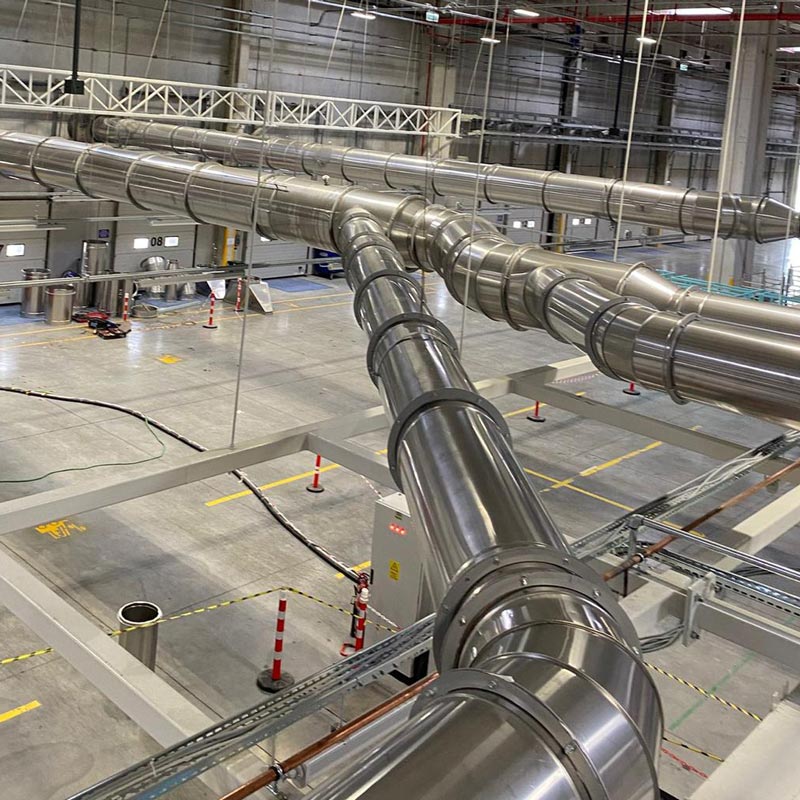
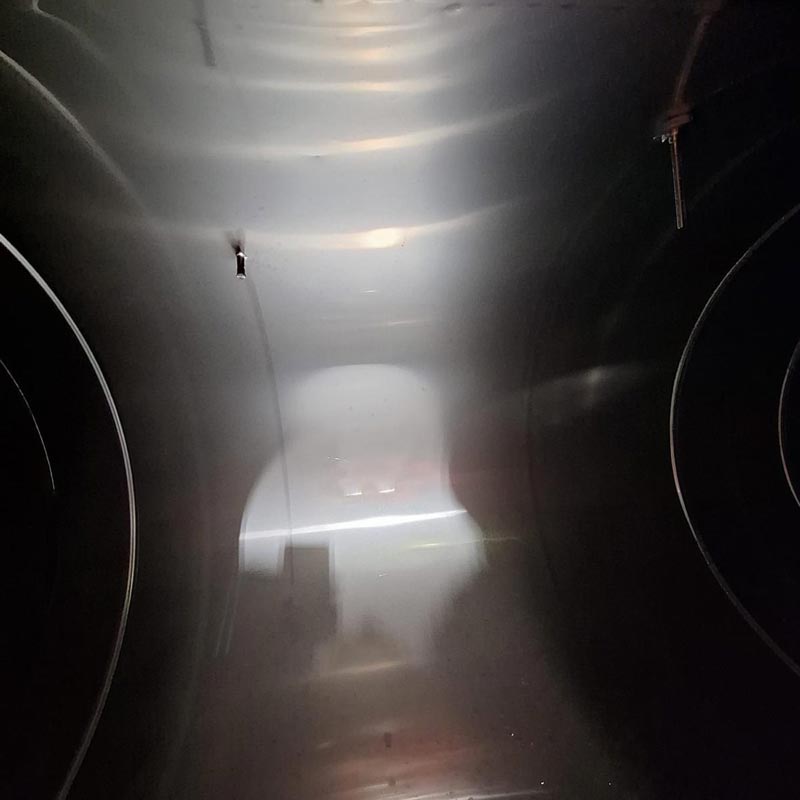
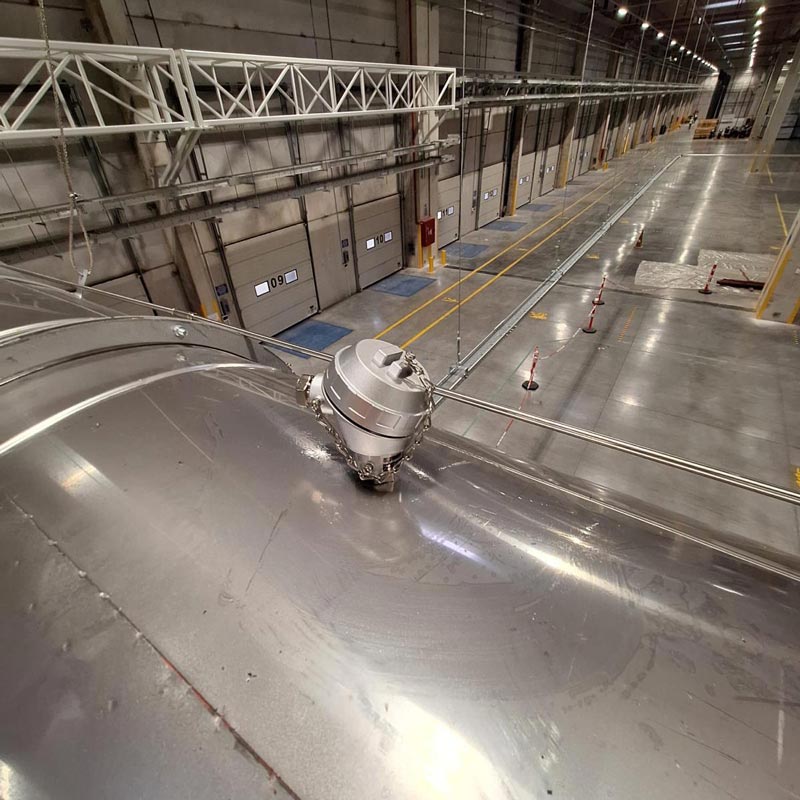
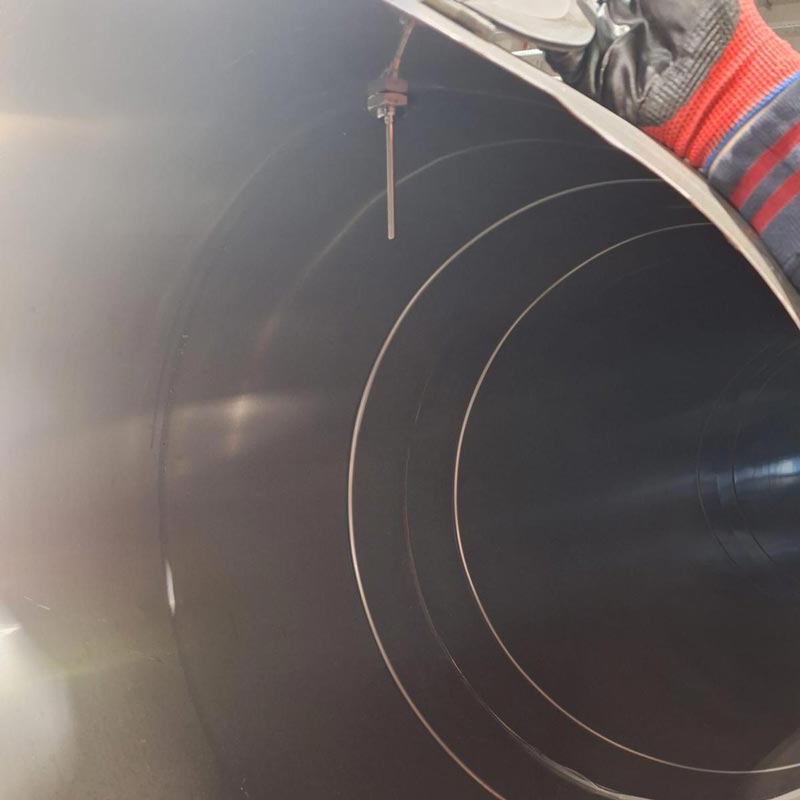
In-Duct Misting System
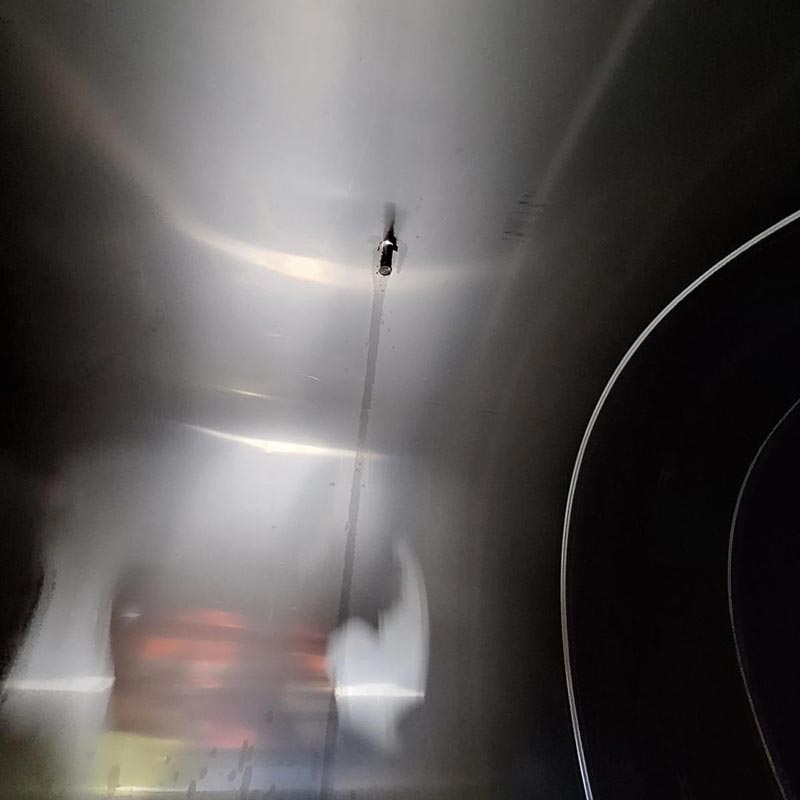
One of the key engineering features that differentiates this project from conventional applications is the misting technology integrated into the duct system.
Operating at predetermined intervals, the system sprays a controlled amount of water inside the ductwork to reduce the energy of hot particles and sparks.
This solution provides the following advantages:
- Reduces the temperature of hot particles.
- Minimizes spark propagation.
- Enhances fire safety.
- Supports filtration efficiency.
- Controls potential risks inside the duct system.
This engineering approach enables not only the transportation of welding fumes but also their safe transportation throughout the extraction system.
Hydrodynamic Wet Filtration Technology
The airflow pre-conditioned by the misting system is directed to the high-efficiency IDRODUST hydrodynamic wet filtration system.
The Wet Scrubber technology utilizes:
- Pre-settling chamber
- Venturi throat
- Air-water micro mixing
- Droplet separator system
to efficiently capture welding fumes and fine metal particles.
In addition to providing safe operation in processes involving sparks, this technology also offers low maintenance requirements and high operational efficiency.
Long-Term Performance
Sustainable Filtration Performance
The true performance of a filtration system should not be measured solely by its initial operating efficiency.
Long-term success should be evaluated according to criteria such as:
- Stable extraction performance
- Low maintenance requirements
- Continuous operation of safety systems
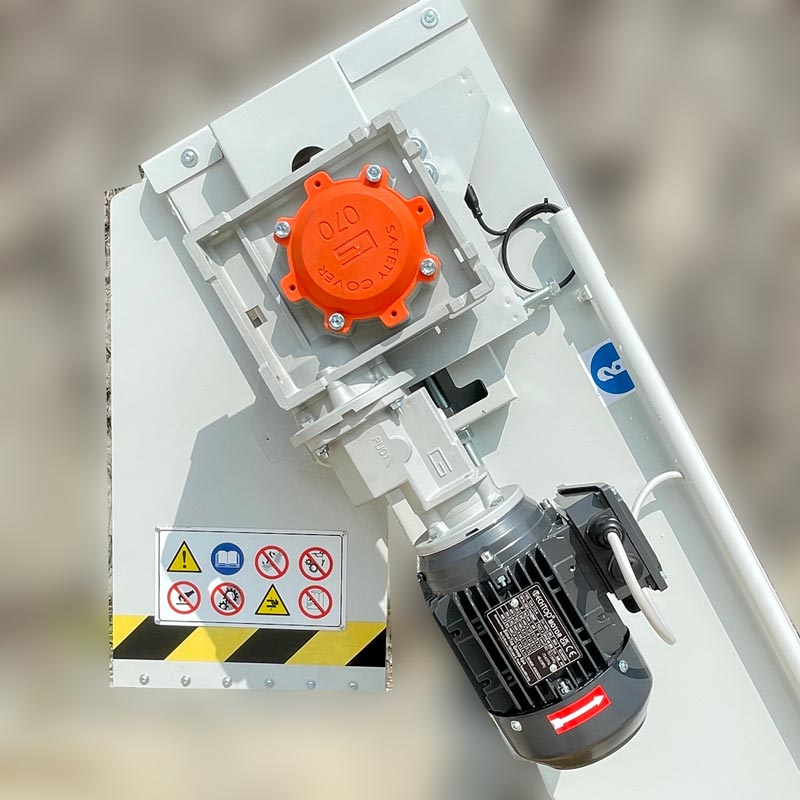
- Easy equipment accessibility
- Operational reliability
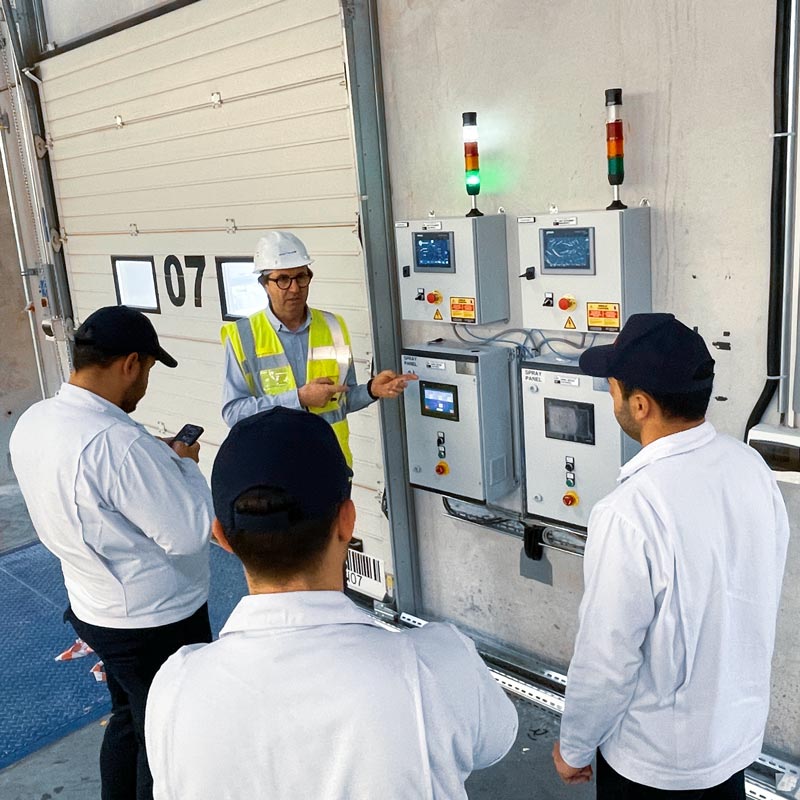
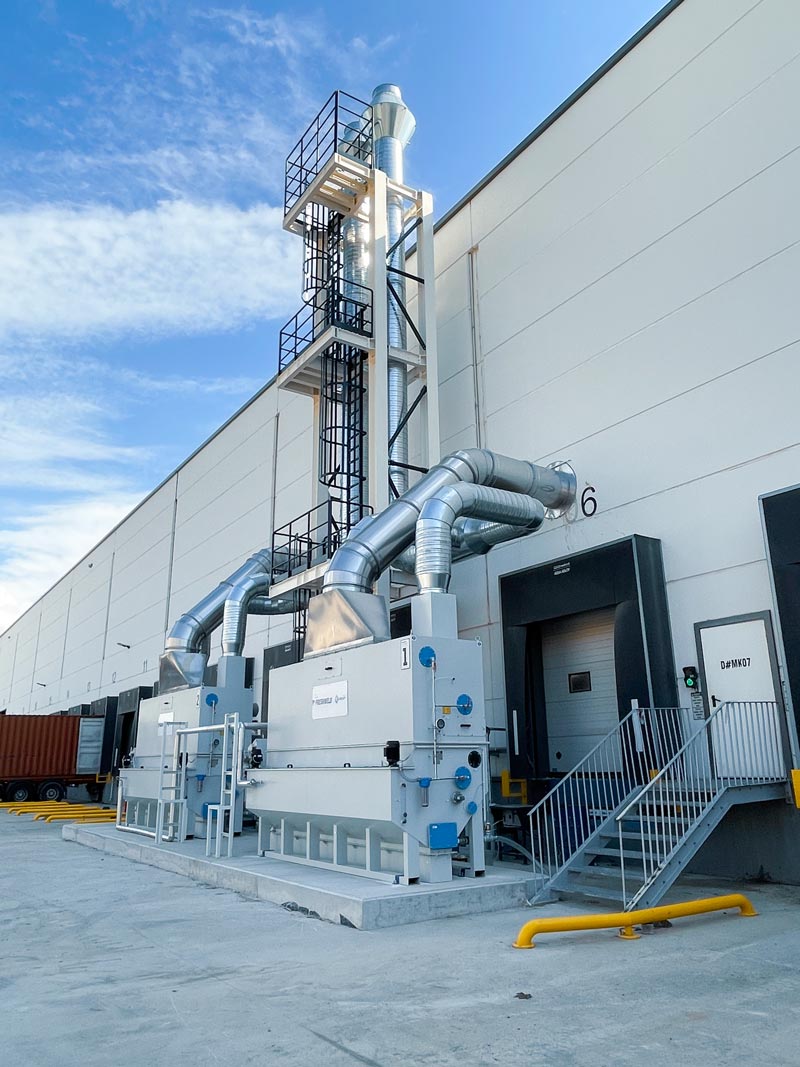
The wet filtration system, integrated misting infrastructure, and automation-assisted control architecture implemented in this project were specifically designed to achieve sustainable long-term operating performance.
Industry Analysis
Why Has Fume Management Become Critical in Welding Fixture Operations?
Manufacturing operations performed on welding fixtures involve repetitive production cycles with intensive welding activities.
This results in:
- Higher welding fume generation
- Increased transportation of hot particles
- Greater spark hazards
- More intensive equipment utilization
As a result, modern welding fume extraction systems are no longer evaluated solely based on airflow capacity. Fire safety, ease of maintenance, energy efficiency, and long-term operational performance have become equally important evaluation criteria.
When misting systems, fire dampers, and wet scrubber technologies are integrated, they provide a multi-layered safety approach for modern welding operations.
Conclusion & Evaluation
Success in welding fixture operations cannot be achieved simply by removing welding fumes from the workplace.
True success is achieved through integrated systems that protect employee health, improve equipment safety, reduce fire risks, and support continuous production.
In this project, the in-duct misting system, fire dampers, temperature monitoring infrastructure, and hydrodynamic wet filtration technology were combined into a single engineering solution that delivers both high-performance welding fume extraction and an advanced level of operational safety.
As a result, welding fume control has evolved beyond a standard filtration application and has become an essential component of process safety and sustainable manufacturing operations in modern industrial facilities.
FRESHWELD Solutions for Production Line Industrial Ventilation
-
https://www.osha.gov/welding-cutting-brazing
Occupational Safety and Health Administration (OSHA), Welding, Cutting and Brazing Safety Guidelines. -
https://www.hse.gov.uk/welding/
Health and Safety Executive (HSE), Welding Fume Control and Workplace Exposure Guidance.