

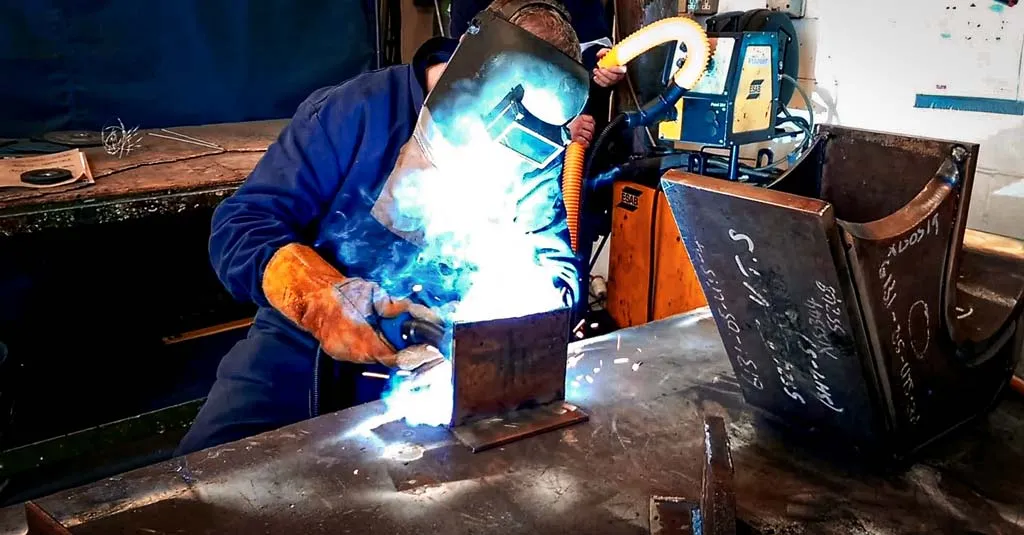
The challenges and limitations faced in fume extraction torch systems can be grouped into four main categories.
1- EXCESSIVE WEIGHT:
Complaints about heavy torches are among the most common issues. Thanks to advances in technology, this problem is gradually being resolved. Modern torch designs now focus more on ergonomics, while innovative cable and hose solutions provide greater maneuverability, making today’s fume extraction torches far more user-friendly.
To overcome this issue and improve operator satisfaction, always evaluate the ergonomic comfort of the torch. Check the torch angle, wrist strain, and movement flexibility.
2- LIMITED ACCESS TO THE WELD:
Due to bulky and oversized torch designs, many welders struggle to access tight welding points. This is often caused by manufacturers not adopting standard nozzle sizes. As a result, welders are unable to achieve the desired efficiency.
When investing in equipment, choose torch systems with standard-sized nozzles and designs aligned with current industry norms to maximize productivity.
3- INSUFFICIENT FUME CAPTURE:
This problem can arise in both small- and large-scale welding operations. There are multiple factors that can reduce fume capture efficiency: narrow openings, shortened hoses, or hoses with small diameters restricting airflow.
If there is no technical issue with the fume extraction torch itself, ensure that the welder’s positioning is correct. Proper alignment and torch orientation are crucial for effective fume capture.
4- POROSITY AND POOR WELD QUALITY:
Porosity is one of the most common welding quality problems—and is particularly common with fume extraction torches. In older torch designs, insufficient shielding gas coverage, often due to poor airflow design, can cause porosity issues.
The best way to prevent this is to control the factors affecting shielding gas flow. Maintaining correct amperage, voltage, and welding procedures, while checking gas flow with a portable flowmeter, helps ensure consistent weld quality.
Our content emphasizing worker and environmental health is for informational purposes only and is based on research available at the time of publication. For any questions, concerns, diagnoses, or treatment needs related to your health, please consult a physician or a qualified healthcare provider.