
Certified Welding Graduates! From metal fabrication and shipbuilding to energy projects and industrial facilities, the demand for qualified welders is growing rapidly worldwide.
As experienced welders retire, new opportunities are opening up for young, skilled, and motivated graduates trained in modern welding techniques.
Rising Industry Demand and Its Causes
According to international welding data analysts, there is a significant shortage of qualified professionals in the welding industry. Data from the American Welding Society (AWS) shows an average of 82,500 welding job openings per year between 2025–2029. In addition, more than 157,000 welding professionals are nearing retirement. Across Europe, the welder shortage has exceeded 50% in many countries.
As a result, demand for well-trained graduates continues to surge.
Career Opportunities for New Welding Graduates
- High employability: Many companies prefer hiring certified graduates over training unqualified workers from scratch.
- Professional growth and certification: With training in welding methods, quality control, and automated/robotic welding, career advancement becomes much faster.
- Competitive salary potential: Rising demand and a limited skilled talent pool provide strong bargaining power for graduates.
- Diverse industry options: Opportunities span machinery manufacturing, energy, petrochemical, defense, aerospace, and more.
Key Skills That Set You Apart
To stand out among new graduates, the following skills are essential:
- Knowledge of core welding methods: Proficiency in MIG/MAG, TIG, and MMA welding techniques.
- Parameter control expertise: Ability to set current, voltage, wire feed speed, and shielding gas parameters correctly.
- Quality inspection awareness: Understanding of weld bead inspection, penetration testing, and defect analysis.
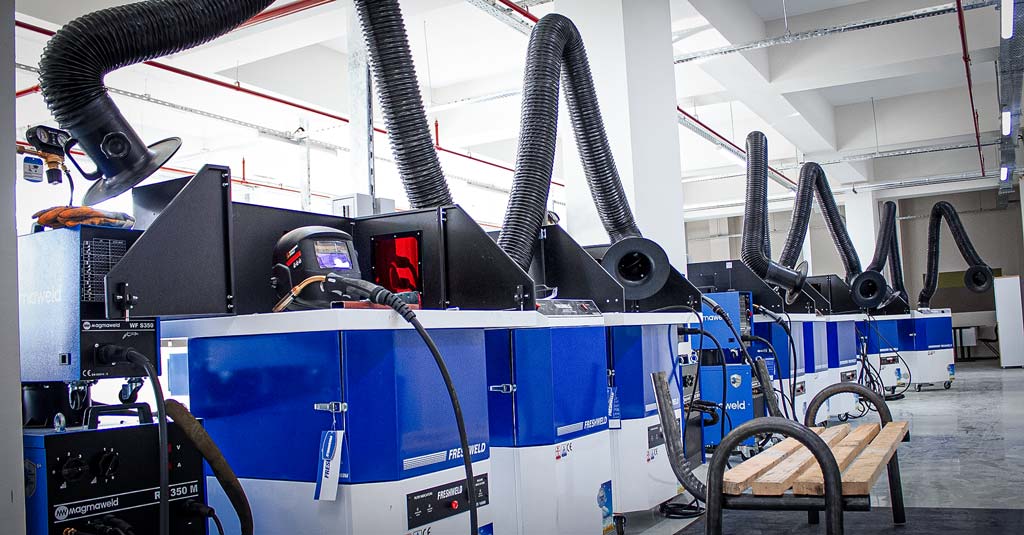
- Welding safety practices: Proper use of fume extraction systems, ventilation, and personal protective equipment (PPE).
- Technology adaptability: Quick learning and adaptation to automation, robotic welding, and digital control systems.
Why Employers Should Hire New Graduates
– New graduates adapt quickly to company culture and bring a “clean slate” with no bad habits.
– Certified welders are trained in modern technologies and methodologies, offering more flexibility than traditional approaches.
– Companies can build long-term relationships with younger welders, improving retention and loyalty.
– Hiring graduates helps optimize labor costs — they start at entry-level rates and grow in value as they gain experience.
Roadmap to Success
1. Graduate from a reputable welding education program (technical school, vocational institute, or industrial training center).
2. Gain hands-on workshop experience with real-world welding tasks.
3. Obtain professional certifications (e.g., AWS, EWF, ISO welding standards).
4. Build industry connections and pursue internships or apprenticeships.
5. Stay current through seminars, online courses, and emerging welding technologies.
Conclusion
The welding industry’s demographic shift and increasing demand are creating powerful career opportunities for certified welding graduates.
The sector now needs skilled and motivated young welders more than ever. If you’ve completed your welding education, now is the time to take action!
Be the next-generation welder — help build the production lines of the future.
— Source: “Welders Workforce Data, AWS”, “Global Welder Shortage – Kemppi”, WeldFeed and other industry reports
Our content emphasizing worker and environmental health is for informational purposes only and is based on research available at the time of publication. For any questions, concerns, diagnoses, or treatment needs related to your health, please consult a physician or a qualified healthcare provider.