
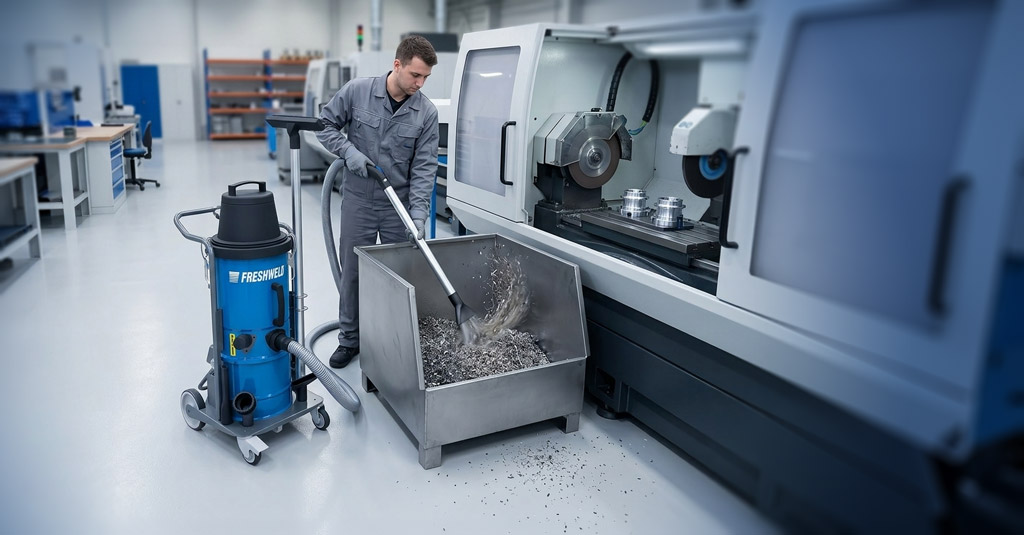
Metal swarf accumulating around CNC machines, fine dust generated by grinding operations, oily waste mixed with cutting fluids and solid particles spread across production floors cannot all be managed with the same cleaning method. The physical properties, density and location of each material directly affect the required suction capacity, filtration configuration, collection container and discharge method.
Industrial vacuum cleaners are designed to collect swarf, dust, liquids and other process residues generated during production or maintenance operations in a controlled manner. When the correct system is selected, it can reduce cleaning time, improve maintenance access to machinery and support more organised production-area management.
However, not every industrial vacuum system is suitable for every material. Dry metal swarf, oily swarf, fine dust, emulsions and general production waste require solutions with different technical characteristics. For this reason, the selection process should begin with the application conditions rather than motor power alone.
How Do Metal Swarf, Dust and Liquids Affect Production Processes?
Production waste is not limited to visible contamination on the floor. Materials generated during machining, welding, grinding, plastics processing, food production and maintenance operations can spread to machine surroundings, service points and access routes.
 Metal Swarf and Burrs
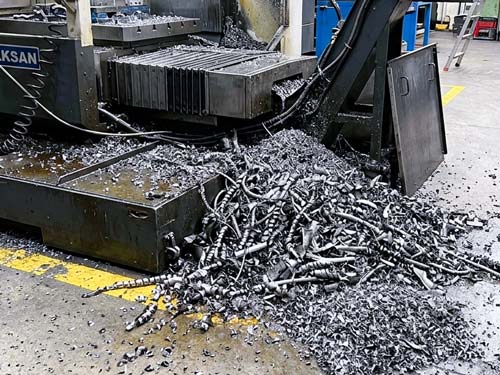
Dry or oily metal swarf can accumulate around CNC machines, beneath equipment, near slideway guards and at maintenance access points. Heavy swarf build-up may extend routine cleaning time and make it more difficult for maintenance teams to reach machine components. Attempting to collect large or sharp fragments with standard cleaning equipment can also cause rapid wear in hoses, filters and collection containers.
 Fine Dust and Particles
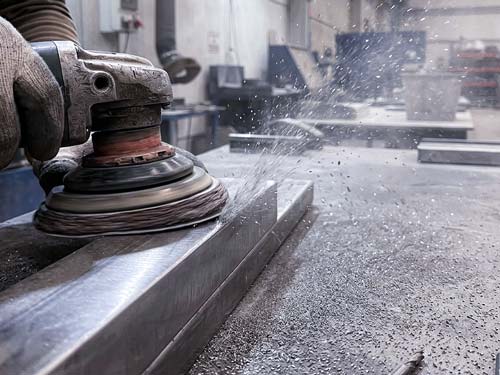
Fine dust generated during grinding, sanding, cutting, packaging and dry-product processing can become airborne again when swept or blown with compressed air. These particles therefore need to be conveyed into a collection container in a controlled manner and retained by a filtration system suitable for the application.
 Oil, Emulsion and Cutting Fluids
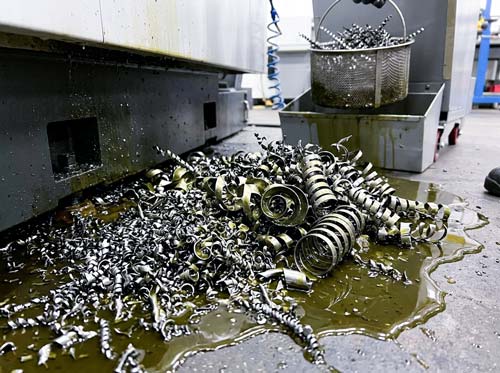
Coolants and metalworking fluids used in CNC machines can gradually become mixed with metal swarf and other solid particles. In these applications, liquid recovery alone is not sufficient. Separation of solids from liquids, easy container discharge and, where appropriate, recovery of reusable cutting fluid should also be considered.
 General Process Waste
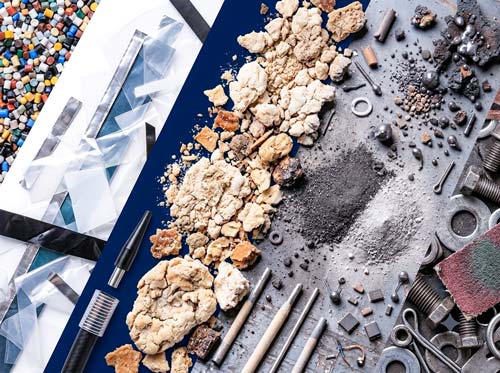
Plastic granules, packaging offcuts, dry spillages from food production, welding slag and solid maintenance waste all have different densities and particle sizes. Hose diameter, accessory selection and container capacity directly affect how safely and efficiently these materials can be collected.
Why Are Industrial Vacuum Cleaners Different from Standard Cleaning Equipment?
Industrial vacuum systems are engineered for intensive duty cycles, heavier materials and the operating conditions found in production environments. Compared with standard cleaning equipment, they can offer higher durability, application-specific filtration, larger collection capacities and accessories suitable for different waste types.
The performance of an industrial vacuum cleaner should not be assessed by motor power alone. The following technical factors should be evaluated together:
- Airflow: Important for conveying lightweight dust and materials spread across wide surfaces.
- Vacuum pressure: Becomes critical when collecting heavy swarf, dense solids or material through long hoses.
- Filter area and classification: Must be suitable for the particle size and process requirements.
- Collection capacity: Should be evaluated together with the daily waste volume and required emptying frequency.
- Hose and accessory diameter: Must match the size of the swarf or solid fragments being collected.
- Wet and dry capability: Essential where liquids or solids mixed with liquids are to be recovered.
- Discharge system: Directly affects operator ergonomics when handling heavy or high-volume materials.
Where Are Industrial Vacuum Cleaners Used?
The correct application is determined not only by the industry but also by the physical characteristics of the waste. Even within the same facility, general floor cleaning, CNC sump maintenance and dry swarf collection may require different systems.
| Application Area | Materials Collected | Primary Requirement |
|---|---|---|
| CNC and machining operations | Dry swarf, oily swarf, emulsions and cutting fluids | Cleaning machine surroundings, sumps and maintenance points |
| Metalworking facilities | Metal dust, burrs, metal particles and production residues | Cleaning floors, areas beneath machinery and maintenance zones |
| Welding and grinding areas | Metal dust, slag, burrs and solid waste | Routine cleaning of workstations and surrounding areas |
| Plastics and packaging production | Granules, offcuts, dust and packaging residues | Collection of spillages around production lines and machinery |
| Food production and packaging | Flour, wheat, lentils, pulses and dry product spillages | Controlled cleaning in processing and packaging areas |
| Woodworking | Wood chips and coarse dry particles | Collection of waste around cutting and processing machinery |
| Maintenance, warehouse and general plant areas | Dust, liquids, small solids and general production waste | Periodic cleaning of floors, equipment and maintenance areas |
With the correct model and accessories, industrial vacuum cleaners can also be used in large warehouses, heavily used indoor spaces, hotels and conference halls. However, the primary focus of the FRESHWELD product range is the management of metal swarf, oily swarf, metal dust, liquids and various process residues generated in manufacturing facilities.
How Should the Right Industrial Vacuum Cleaner Be Selected?
The first step in selecting the correct vacuum technology is to identify whether the material is dry, wet, fine, coarse, lightweight, heavy, abrasive or mixed with liquid. A machine used for general plant cleaning does not have the same technical configuration as a system designed to recover oily swarf from a CNC sump.
1. Identify the Material to Be Collected
Dry dust, metal swarf, liquids and oily swarf mixtures require different filters, hoses, collection containers and discharge systems. Filter configuration becomes the priority for fine dust applications, while hose diameter and container durability are more important for coarse swarf.
2. Calculate the Daily Waste Volume and Operating Time
Container capacity affects not only the physical size of the machine but also emptying frequency and labour requirements. For intensive, repeated use throughout a shift, a motor suitable for continuous duty and a larger collection capacity should be considered.
3. Distinguish Between Wet and Dry Applications
Not every industrial vacuum is suitable for liquid recovery. Applications involving liquids, emulsions or swarf mixed with oil require systems designed for wet operation. Where solids and liquids need to be separated, specialist product groups with this function should be considered.
4. Evaluate Mobility and Ease of Discharge
In facilities where the machine will be moved between production points, wheel configuration, hose reach and a compact footprint provide operational advantages. Where heavy swarf or large volumes of liquid are collected, the container must also be emptied safely and quickly.
5. Review Filtration and Maintenance Requirements
Filter area, filter-cleaning method, spare-parts availability and scheduled maintenance requirements all affect total cost of ownership. Before considering the initial purchase price, the machine should be assessed against the plant’s daily operating conditions.
FRESHWELD Industrial Vacuum Solution Range
FRESHWELD offers four main industrial vacuum series for different production residues and cleaning scenarios. When selecting between product groups, the type of material and intensity of use should be prioritised over the industry name alone.
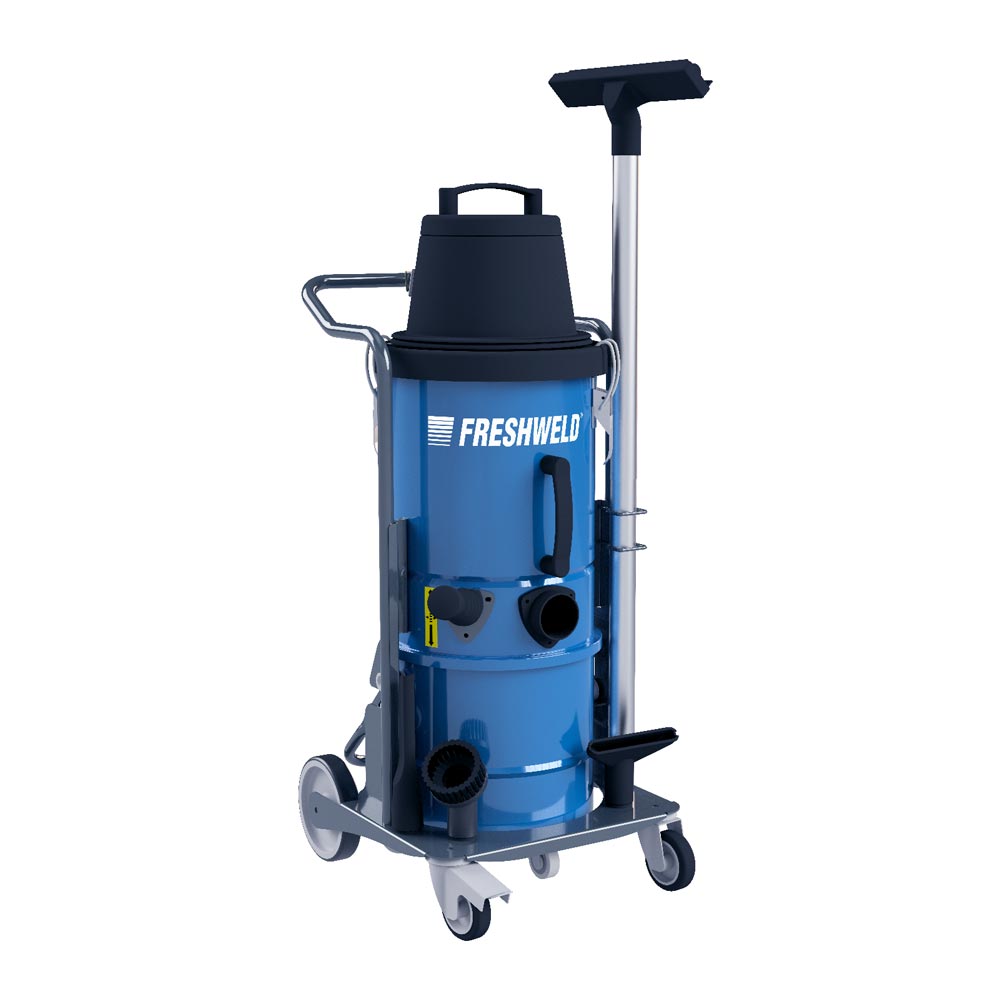
VACUUM W Series
General industrial cleaning and mobile use
Suitable for wet, dry and dusty materials.
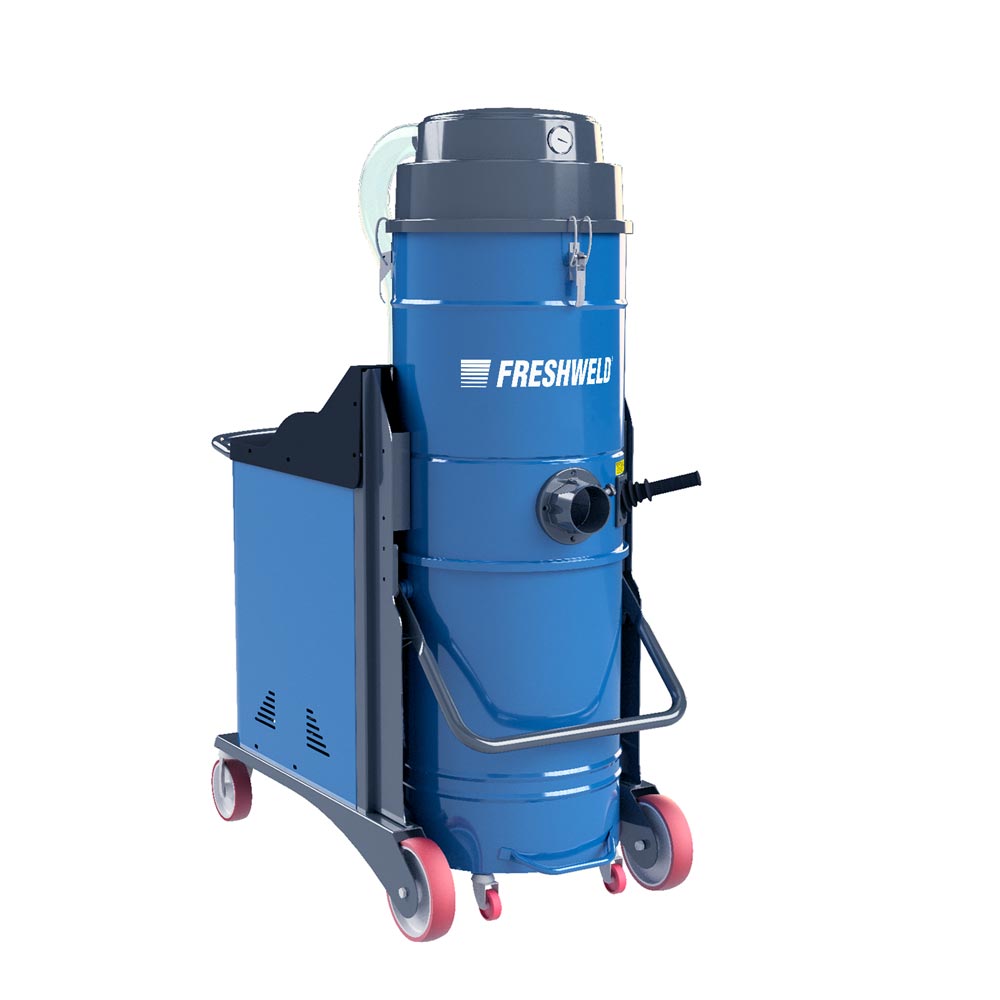
VACUUM M Series
Intensive production and plant cleaning
Developed for dust, solids, liquids and production residues.
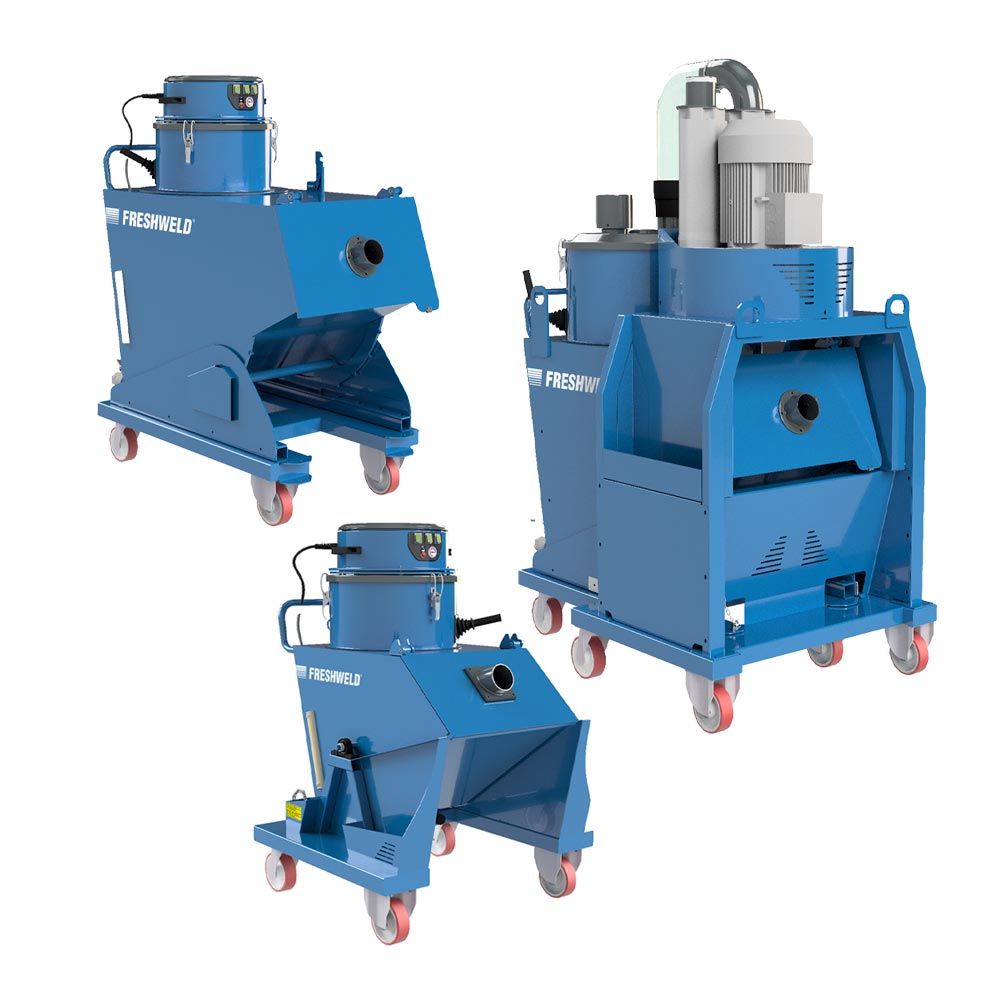
CHIPVAC Series
Collection of dry swarf and coarse solids
Suitable for metal swarf, wood chips and coarse dry particles.
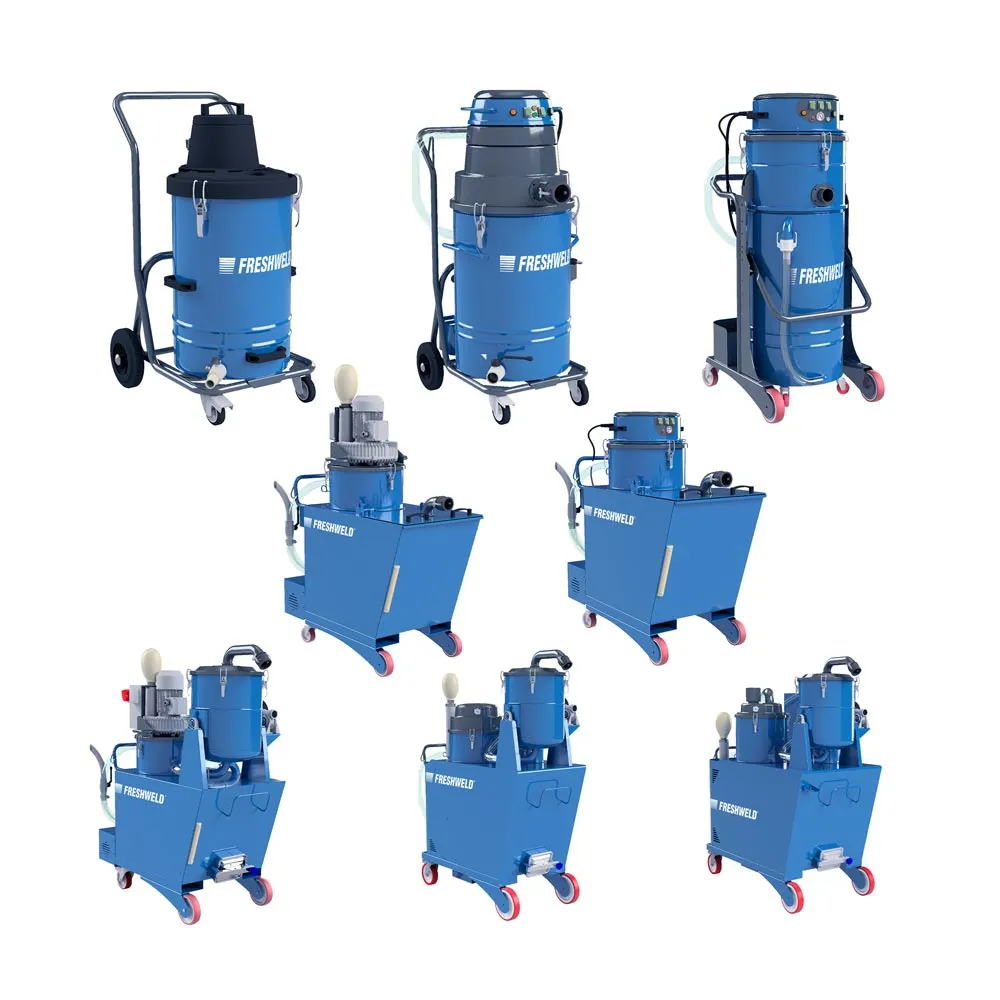
OILVAC Series
Oil, liquid and swarf management in CNC machining
Developed for oil, emulsions, cutting fluids and oily metal swarf.
FRESHWELD industrial high-vacuum cleaning solutions can be configured with different model options according to plant operating conditions, the material to be collected and the required capacity.
How Should Vacuum Cleaning Be Planned in Production Areas?
To achieve efficient results from industrial vacuum systems, cleaning should not be treated merely as a reactive task carried out once waste has accumulated. A planned system should be established according to the process, shift pattern, maintenance intervals and daily waste volume.
- Identify the machines and process points where the highest volume of waste is generated.
- Separate daily, end-of-shift, weekly and maintenance-period cleaning tasks.
- Assign suitable equipment for dry swarf, oily swarf, fine dust and liquids.
- Check container fill levels and filter condition regularly.
- Train operators in the correct accessories, discharge methods and safe operating procedures.
- Segregate collected materials in accordance with the facility’s waste-management procedures.
In CNC and machining areas in particular, cleaning around the machine and servicing the coolant sump should not be treated as the same task. Dry swarf collection, liquid recovery and oily swarf separation have different technical requirements.
What Should Be Considered When Using Industrial Vacuum Cleaners?
Although industrial vacuum cleaners can collect a wide range of process residues, not every model is suitable for every application. Before use, the technical specifications of the machine and the hazards associated with the material must be evaluated together.
- Standard vacuum cleaners must not be used for combustible or explosive dust.
- Liquids must only be recovered using models designed for wet operation.
- Hot, glowing or still-burning material must not be vacuumed.
- Hose and accessory diameter must be suitable for the size of the swarf or solid fragments.
- Filters must be inspected and cleaned at the intervals specified by the manufacturer.
- The collection container must be emptied safely before its rated capacity is exceeded.
- For food production areas, material compatibility, hygiene and process suitability must be assessed separately.
A task-specific risk assessment should be completed for chemicals, specialist dusts or potentially explosive atmospheres, and equipment with the necessary certification must be used.
Conclusion
Metal swarf, fine dust, oil, emulsions and other process residues cannot all be managed using the same method. To establish an effective cleaning and waste-collection system, the physical characteristics of the material, its daily volume, the operating time and the process in which it occurs must be evaluated together.
Correctly selected industrial vacuum cleaners support more than floor cleaning. They also help maintain orderly machine surroundings, improve maintenance planning and enable controlled management of swarf, dust and liquids in production areas. Selection should therefore focus not only on motor power, but also on application-specific vacuum pressure, airflow, filtration, collection capacity and discharge features.
Contact Our Technical Team and Let's Choose the Right Product TogetherFrequently Asked Questions About Industrial Vacuum Cleaners
What is the difference between an industrial vacuum cleaner and a standard vacuum cleaner?
Industrial vacuum cleaners are designed for intensive use, heavy and abrasive materials, high waste volumes and the operating conditions found in production environments. Standard vacuum cleaners are generally intended for short-term collection of lightweight domestic dust.
Can industrial vacuum cleaners recover liquids?
Models designed for wet operation can collect water, emulsions, cutting fluids and other liquid waste. However, not every industrial vacuum is suitable for liquid recovery, so the technical specifications of the selected model must be checked.
Which vacuum system should be used for metal swarf?
For dry metal swarf, high-capacity CHIPVAC-type systems designed for coarse particles can be considered. Where swarf is mixed with oil or cutting fluid, OILVAC-type solutions capable of separating solids from liquids should be preferred.
Which features are important for fine dust?
For fine-dust applications, filter area, filter classification, filter-cleaning method and system integrity are key considerations. If the dust is combustible or explosive, application-specific certified equipment should be selected instead of standard products.
Can industrial vacuum cleaners be used in food-production facilities?
Models with suitable body materials, filtration and cleaning procedures can be used in food-processing and packaging areas. The facility’s hygiene, product-safety and process requirements must be evaluated separately during selection.
Identify the Right Industrial Vacuum Cleaners Technology for Your Production Area
Review the FRESHWELD product range or contact our technical team to identify an industrial vacuum system suited to the material being collected, daily operating time and plant conditions.
Explore Industrial Vacuum Cleaners
Contact Our Technical Team and Let's Choose the Right Product Together