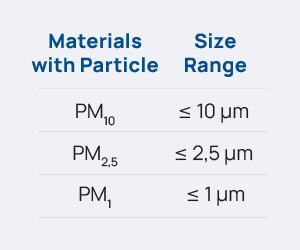
 Due to the increasing global air pollution, the impact of particulate matter on human health has been studied more comprehensively. As a result, fine dust — or particulate matter — has been identified as a serious health threat, causing respiratory illnesses and cancer, and has become a major concern in health and safety regulations.
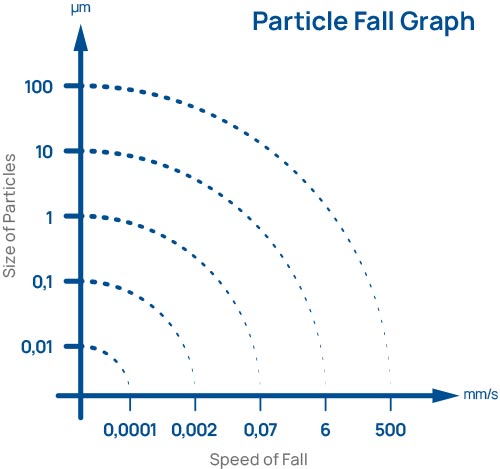
Particles larger than 10 μm settle rapidly in the atmosphere and can remain suspended only near their emission source or under strong wind conditions.
In an enclosed room without airflow, the sedimentation speed and behavior of particulate matter occur as shown in the chart below.
Size Range of Industrial Fumes and Dust
Most particles larger than 10 μm in diameter can be seen with the naked eye when lighting and contrast are adequate. Under normal conditions, our eyes can only detect particles of approximately 30 μm and above.
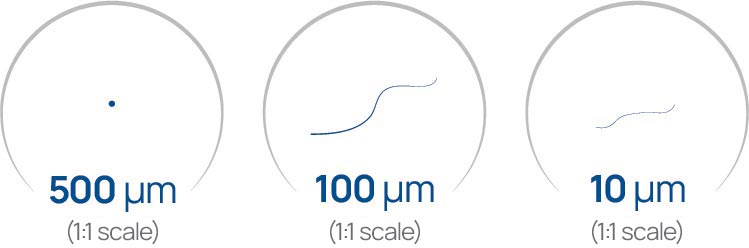
- The first sample in the chart is approximately 500 μm
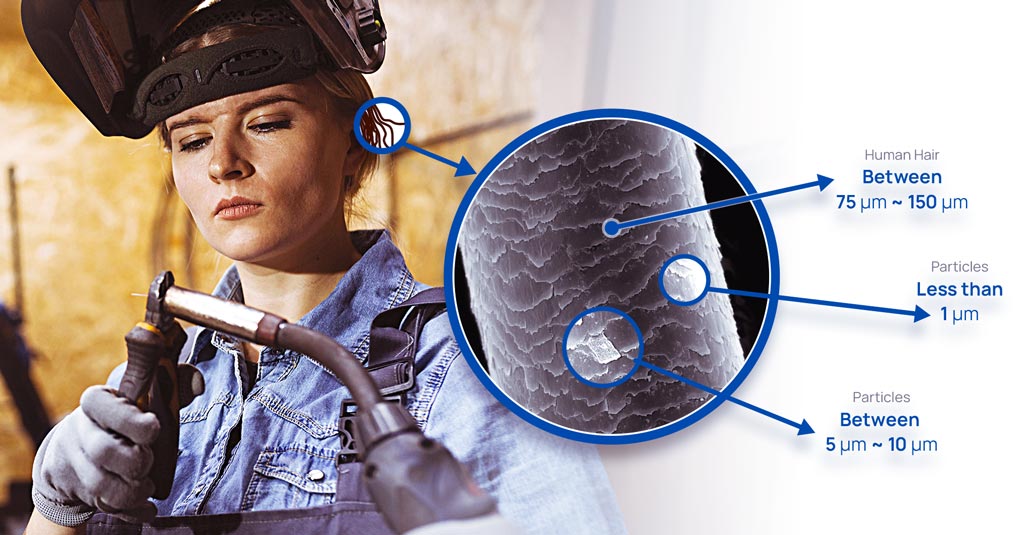
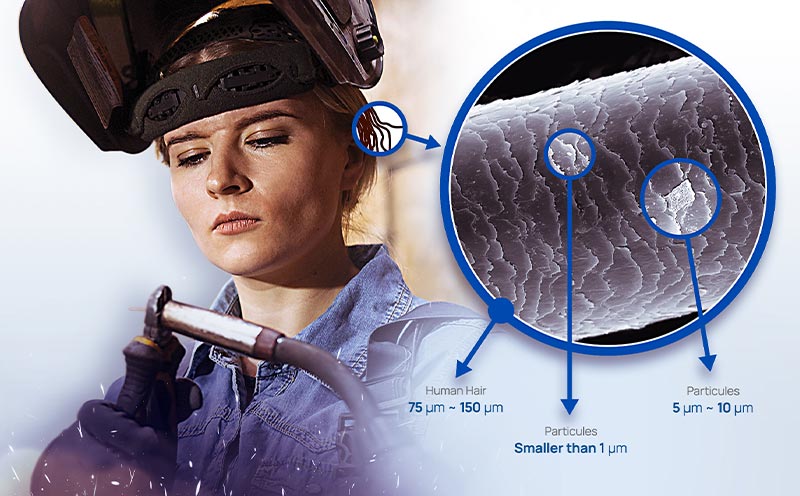
- Human hair thickness: 100 μm
- Smallest particle visible to the naked eye: >10 μm
- Particles harmful to human health: <5 μm
- Coarse industrial dust: >10 μm (Coarse)
- Fine industrial dust: <10 μm (Fine)
- Welding fume particles <1 μm (0.2 – 0.8 μm)
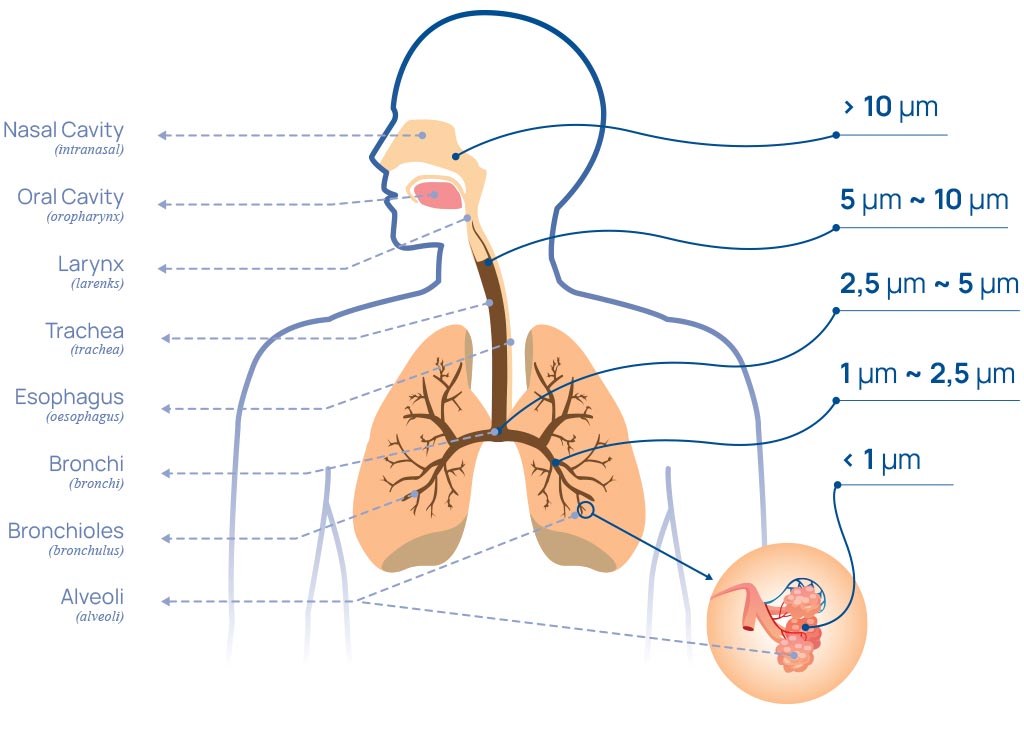
Particulate Matter Penetration Levels in the Human Respiratory System:
- 5 µm – 10 µm: larger particles are captured by the upper respiratory tract and expelled through coughing or swallowing.
- 2.5 µm – 5 µm: these particles can reach deep into the lungs but are mostly trapped in the upper airway.
- 1 µm – 2.5 µm: particles are deposited in the bronchi, posing significant health risks.
- <1 µm: ultrafine particles small enough to pass through alveolar membranes and enter the bloodstream.
Why Was the ISO 16890 Standard Introduced Instead of EN 779?
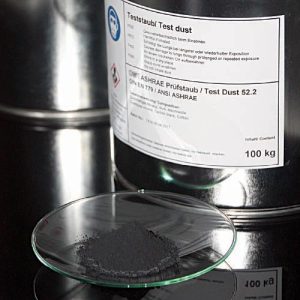 According to the EN779:2012 standard, air filter efficiency testing was conducted using synthetic dust known as ASHRAE test dust. This test evaluated only a single particle size efficiency of 0.4 μm, under laboratory conditions.