

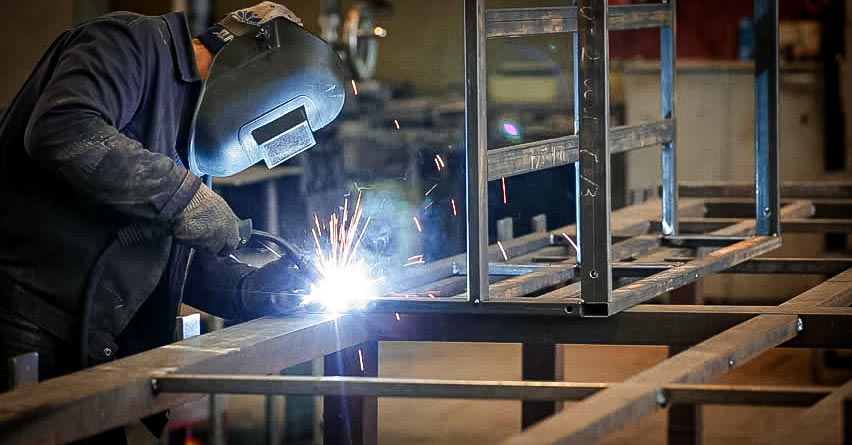
Welders working in the metal fabrication and manufacturing industries are exposed to welding fumes on a daily basis. Continuous exposure over the years can lead to severe occupational diseases that affect respiratory health, lung cancer and overall wellbeing.
The International Agency for Research on Cancer (IARC), a specialized branch of the World Health Organization (WHO), provides scientific support to governments worldwide for preventing exposure to potential carcinogens.
In its 1989 evaluation, the IARC classified welding fumes as Group 2B – Possibly Carcinogenic to Humans, based on limited evidence in both humans and laboratory animals. However, with the emergence of “significant new evidence” from recent epidemiological and experimental studies, the IARC has now upgraded the classification of welding fumes to Group 1 – Carcinogenic to Humans.
Furthermore, ultraviolet (UV) radiation produced during welding operations was categorized as a Group 1 carcinogen in the IARC Monograph published in 2012.
Protecting Welders from Lung Cancer Risks and Chronic Occupational Diseases
The IARC Monographs systematically identify and assess environmental and occupational factors that increase cancer risks in humans. In a cohort study covering more than 30 occupational groups, welders exposed to welding fumes were found to have a considerably higher risk of developing lung cancer compared to those unexposed.
The World Health Organization also reports that exposure to chemicals such as toluene, xylene, styrene, pentane, lead, and mercury in various industrial environments can severely harm human health. These substances are linked to neurological disorders such as memory loss, personality changes, irritability, and concentration difficulties.
Preventing Occupational Diseases Through Air Filtration and PPE
During welding operations, multiple hazards can occur, including explosions, fires, and harmful radiation exposure. To minimize these risks, welders must use personal protective equipment (PPE) such as welding helmets, goggles, and gloves. Among these, the welding respirator mask plays a vital role in preventing the inhalation of toxic fumes that may lead to long-term respiratory diseases, including lung cancer. Masks should be lightweight, ergonomic, and should not restrict movement.
To protect both welders and workers operating near welding areas from lung cancer and other respiratory illnesses, it is essential to use welding fume extraction systems that remove fumes directly from the source and purify the air before it is recirculated into the workspace.
Both centralized and mobile (localized) extraction units provide substantial benefits — ensuring compliance with occupational safety standards, protecting worker health, and promoting sustainable, cleaner production environments.
Comprehensive Protection for Welders’ Health and Workplace Air Quality
For detailed information and tailored solutions specific to your application, please contact our sales representatives today.
Our content emphasizing worker and environmental health is for informational purposes only and is based on research available at the time of publication. For any questions, concerns, diagnoses, or treatment needs related to your health, please consult a physician or a qualified healthcare provider.
