
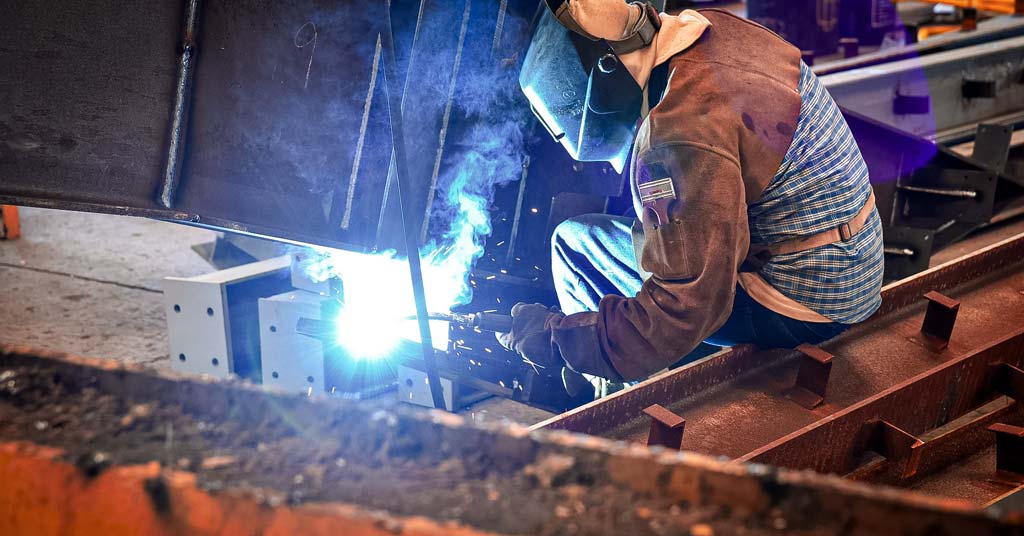
Proper weld fume management is not just a moral and legal requirement. A safe and comfortable work environment also enhances productivity and quality, contributing to your company’s competitive advantage.
Every stage of fume management in your facility should be carefully planned and executed. The key steps are as follows:
1. Substitution in Weld Fume Management:
Review your welding processes. By replacing certain materials or gases, you can significantly reduce fume generation. For example, you may substitute your current shielding gas with a cleaner, low-emission alternative.
2. Isolation:
If substitution is not sufficient, isolation ensures fume capture right at the source. This can be achieved by using vacuum extraction systems or hoods installed directly above the welding areas. Fume extraction systems come in various sizes, suction capacities, and air displacement rates to suit different production needs.
3. Ventilation:
When source extraction or isolation is not feasible, providing proper air circulation across your facility can help minimize airborne fumes. However, general ventilation alone is not recommended as a welding fume control method. While it may appear to meet occupational safety standards, unfiltered exhaust releases harmful contaminants into the environment. Therefore, welding fumes should always be locally extracted, filtered, and then released as clean air.
4. Safe Work Practices:
Exposure to welding fumes can be further reduced through improved safety measures, better room cleaning methods, proper body positioning, and the use of advanced personal protective equipment (PPE).
For example, dust masks, half-masks, and air-fed respirators protect welders from inhaling toxic particles. To ensure full effectiveness, these devices must be well-maintained, fitted with clean filters, and tested for compliance with OSHA and ISO safety standards.
Combining better equipment with efficient workplace cleaning can significantly reduce overall fume exposure in your facility.
For detailed information and customized industrial fume extraction solutions, please contact our sales representatives.
Conclusion and Evaluation
Managing the toxic gases released during welding is one of the most critical industrial challenges to minimize their impact on human health and the environment.
With FRESHWELD Fume Extraction and Filtration Solutions, you can comply with occupational safety standards, protect both worker and environmental health, and prevent potential workflow disruptions such as illnesses or accidents.
Remember — with professional Fume Extraction Systems and Welding Ventilation Solutions, you can solve your air quality challenges quickly, effectively, and efficiently!
Contact Our Technical Team and Let's Choose the Right Product TogetherReferences:
- ‘Weld Fume Management in Your Shop’ / Welding Journal
Our content emphasizing worker and environmental health is for informational purposes only and is based on research available at the time of publication. For any questions, concerns, diagnoses, or treatment needs related to your health, please consult a physician or a qualified healthcare provider.