
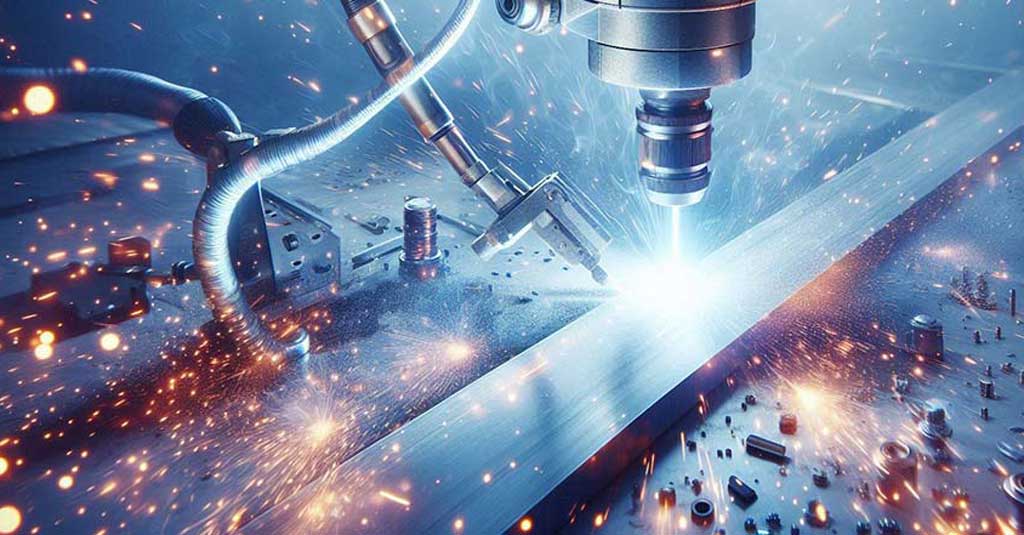
While laser welding fumes requires effective control to protect workers and the environment, laser welding technology itself offers significant advantages in speed, precision, and efficiency in industrial manufacturing processes. Widely used in industries such as automotive, aerospace, electronics, and medical device production, this technology not only enhances product quality but also reduces operational costs.
However, the invisible hazards released during laser welding pose serious health and environmental risks. Therefore, using laser fume extraction systems has become essential to protect workers’ health and minimize environmental impacts.
Advantages of Laser Welding Technology
Compared to other welding methods, laser welding provides numerous advantages. High-precision laser beams enable the joining of thin and complex materials with minimal deformation.
This characteristic makes it a preferred method in sectors where the assembly of small components is required. Moreover, laser welding offers a faster process and results in fewer errors compared to manual welding.
When integrated with automation systems, it enhances production line efficiency and reduces costs.
Another key advantage of laser welding technology is its ability to be applied to a wide variety of materials.
Main Materials and Applications of Laser Welding:
- Carbon steels
- Stainless steels
- Aluminum and aluminum alloys
- Titanium and titanium alloys
- Copper and copper alloys
- Nickel and nickel alloys
- Plastics
- Zinc and galvanized metals
- Gold, silver, and other precious metals
- Superalloys (e.g., high-temperature-resistant alloys used in aerospace applications)
From metals to plastics, this technology provides a versatile and flexible manufacturing solution, increasing productivity while minimizing heat input — which in turn reduces material distortion and burn risks.
Despite its many advantages, the fumes and gases produced during laser welding can have severe effects on human health and the environment.
Hazards Generated During Laser Welding Applications
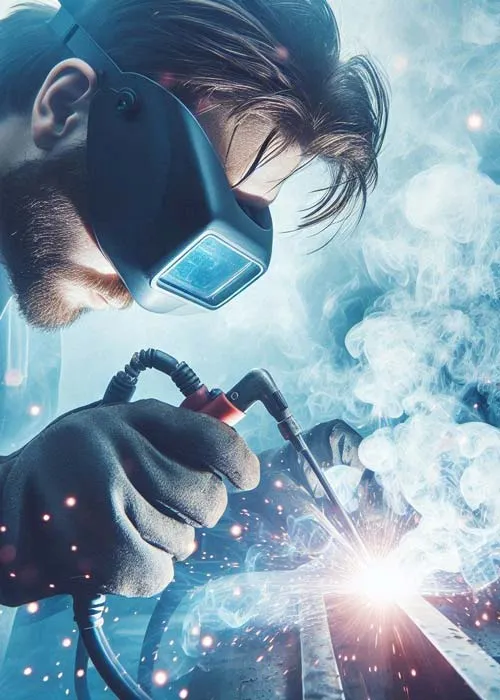




During laser welding, the interaction between high-energy laser beams and materials produces hazardous gases and ultrafine particles. These fumes are invisible but contain highly toxic components.
- Metal oxides (e.g., iron oxide, aluminum oxide, zinc oxide)
- Nitrogen oxides (NOx) (nitric oxide and nitrogen dioxide generated at high temperatures)
- Ozone (O₃) (formed by the reaction of laser energy with oxygen in the air)
- Carbon monoxide (CO) (emitted from welding organic materials)
- Hydrogen cyanide (HCN) (produced when welding coated plastics or certain materials)
- Formaldehyde (generated during welding of organic compounds)
- Heavy metal vapors such as lead and cadmium (from metal coatings and alloys)
- Volatile Organic Compounds (VOC) (e.g., solvent and paint vapors)
- Hydrochloric acid (HCl) (emitted when welding chlorine-containing materials like PVC)
- Fine dust and nanoparticles (especially nano-sized metal particles)
These components can cause severe respiratory damage. Long-term exposure may lead to chronic respiratory diseases, lung damage, or even cancer. In addition, such gases may cause skin irritation and eye disorders.
From an environmental perspective, fumes and gases released during laser welding degrade air quality. Emissions of these pollutants contribute to environmental contamination and may cause long-term damage to ecosystems.
Especially heavy metals and toxic gases can contaminate soil and water sources when released into the environment. Therefore, effective fume extraction and filtration systems are vital to protecting both worker health and the environment.
Fume Extraction Units Filter Selection Chart
How to select the right filter for welding fumes?
Benefits of Fume Extraction Systems
To eliminate the harmful gases produced during laser welding, the use of fume extraction and laser filtration systems is a must.
FRESHWELD®’s L1/102 and L1/150 fume extraction systems are specifically designed for laser welding applications. Compact and mobile, they can be easily integrated into any production setup. With powerful suction and a three-stage filtration system providing 99% efficiency, these units remove toxic gases effectively and release purified air back into the workspace.
The benefits of fume extraction systems include:
- Protects worker health: Prevents inhalation of toxic gases and particles, reducing respiratory illnesses and other health issues.
- Improves environmental health: Filters harmful emissions and minimizes air pollution.
- Boosts productivity: Clean air enhances worker comfort and efficiency.
- Ensures OHS compliance: Creates working conditions that meet Occupational Health and Safety standards.
- Reduces fire hazards: Removes explosive and flammable gases, minimizing fire and explosion risks.
- Extends equipment life: Prevents dust buildup on machinery, reducing maintenance needs and extending lifespan.
- Improves workplace air quality: Enhances visibility and safety by maintaining clean air.
- Controls odor and vapor: Filters unpleasant smells and fumes for a more comfortable work environment.
- Supports sustainability goals: Helps companies meet environmental and sustainability targets.
These advantages highlight the importance of fume extraction systems for occupational safety and environmental protection.
Using the proper filtration systems ensures that workplaces maintain clean air and protect employees’ health. Without such systems, workers are at higher risk of developing respiratory disorders and chronic diseases.
Read more: Protecting Welders from Lung Cancer and Chronic Diseases
Furthermore, these systems, when operated in compliance with Occupational Health and Safety (OHS) regulations, help employers meet legal requirements. They are not merely an expense but a long-term investment in workforce health and productivity.
Reducing Environmental Impact
Another way to minimize the environmental impact of laser welding fumes is through the effective use of fume extraction systems. Our advanced filtration technology removes 99% of harmful gases and particles, releasing only clean air back into the workspace.
This improves indoor air quality while preventing the release of harmful emissions into the atmosphere — contributing to a cleaner environment and helping manufacturers achieve sustainability goals.
FRESHWELD® fume extraction systems for laser welding applications meet the highest standards of worker safety and environmental protection. Our laser fume extraction solutions create cleaner, safer, and more efficient workplaces by minimizing hazardous emissions.
WhatsApp Business Line
If you choose to communicate using the Corporate Customer Service Line via WhatsApp, you are deemed to have accepted the legal obligations and GDPR obligations. Click here to read GDPR obligations
Frequently Asked Questions and Answers
Laser welding is performed by focusing a high-energy laser beam onto materials, melting and joining them precisely.
Laser welding is suitable for stainless steel, carbon steels, aluminum, titanium, nickel, copper, and various plastics.
Yes, the fumes and gases released during laser welding contain toxic substances that contribute to air pollution.
Yes, hazardous gases and fine particles produced during laser welding can threaten worker health, causing respiratory, skin, and eye problems.
Laser welding fumes are captured and filtered using fume extraction systems that remove hazardous gases and particles, returning purified air to the workspace.
Laser welding offers precision, speed, minimal material distortion, and easy automation integration.
Automotive, aerospace, electronics, medical device manufacturing, and general manufacturing sectors widely use laser welding machines.
Nitrogen oxides (NOx), carbon monoxide (CO), ozone (O₃), metal oxides, and volatile organic compounds (VOC) are the most common hazardous emissions.
Laser welding uses laser beams, while arc welding uses electrical current. Laser welding delivers more precise and faster results.
When used with proper fume extraction systems, laser welding machines fully comply with OHS standards and protect workers’ health.
They are essential for filtering harmful fumes and gases during laser welding, protecting both workers and the environment.
Conclusion
No matter how great the industrial advantages of laser welding may be, its potential health and environmental risks cannot be ignored.
To minimize the harmful effects of welding fumes and gases on workers and the environment, efficient fume extraction and filtration systems are indispensable.
Our advanced fume extraction solutions ensure the safe and efficient filtration of laser welding fumes, helping you achieve your occupational safety and environmental sustainability goals.
Our content emphasizing worker and environmental health is for informational purposes only and is based on research available at the time of publication. For any questions, concerns, diagnoses, or treatment needs related to your health, please consult a physician or a qualified healthcare provider.