
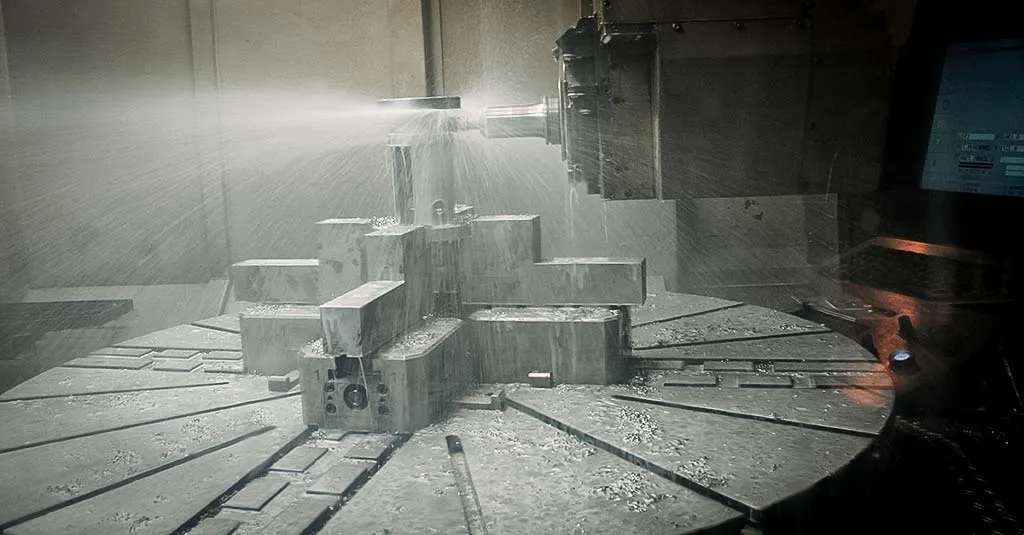
HOW DOES OIL MIST FORM IN CNC MACHINING?
In today’s rapidly evolving manufacturing methods, CNC machining and turning centers undoubtedly take the lead.
During these operations, a significant amount of industrial coolant oil such as boron oil and cutting oil is used.
In some applications, these fluids are diluted with water to form an emulsion, while in others they are used as 100% oil. When combined with the heat generated during machining, these coolants can transform into toxic oil mist or harmful smoke.
WHY IS OIL MIST DANGEROUS?
Don’t assume that the vapor formed by the combination of oil and water under heat is harmless!
Even in the simplest sense, this oily vapor can spread to three main areas:
- It can rise to the ceiling,
- It can settle on the floor,
- It can adhere to machinery and equipment.
Depending on the density, contamination may occur in one or more of these areas simultaneously.
- When it reaches the ceiling, it forms a chemical layer that is highly flammable and difficult to extinguish. This significantly increases the fire hazard and makes fire suppression more challenging.
- When it settles on the floor, the oily film creates a slippery surface, leading to workplace accidents. The oil can also adhere to shoes and workwear, spreading contamination beyond the workspace.
- When it sticks to machines and tools, it can increase equipment failure rates, cause longer maintenance downtimes, and reduce production quality — ultimately impacting the lifeline of the business.
WHAT IS THE SOLUTION TO OIL MIST PROBLEMS?
In summary, machines and applications that generate oil mist must be equipped with integrated oil mist extraction and filtration systems.
Selecting the right filter according to your process type, coolant mixture, and dilution ratio helps reduce operational costs while optimizing system efficiency. (Coolant, Cutting Oil, or Boron Oil)
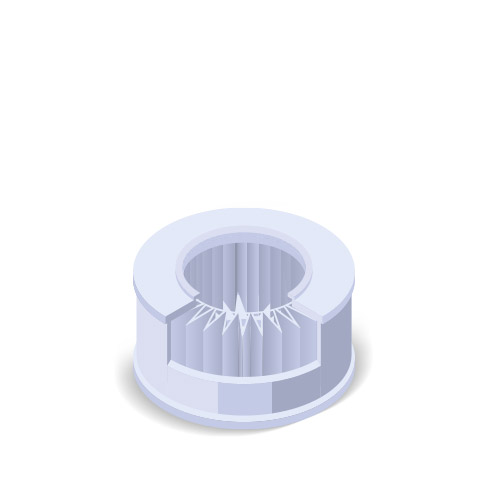
Industrial Oil Mist Filters come in 3 main types:
(To explore the related products, click the links below)
 |
 |
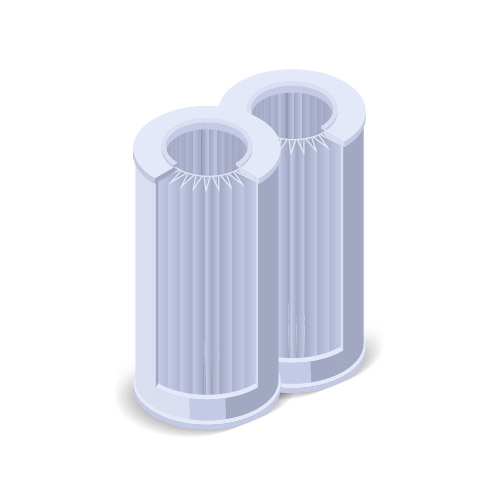 |
| Oil-Mist Centrifugal Filters | Oil-Mist Cassette Filters | Oil-Mist Cartridge Filters |
Systems designed for welding fumes or grinding dust — with or without filters — are NOT effective solutions for oily vapor problems.Here’s why:
- Welding fumes or grinding dust typically have a dry composition.
- Oil mist, however, consists of wet and sticky aerosol particles.
Therefore, the system’s operating principle must be capable of separating and filtering oily aerosols effectively.
- The filtration mechanism should collect extracted oils in a reservoir and pass the remaining vapor through high-efficiency filters for purification.
Click here to learn more about CNC Machining Centers
For customized solutions and detailed information, please contact our sales representatives.