
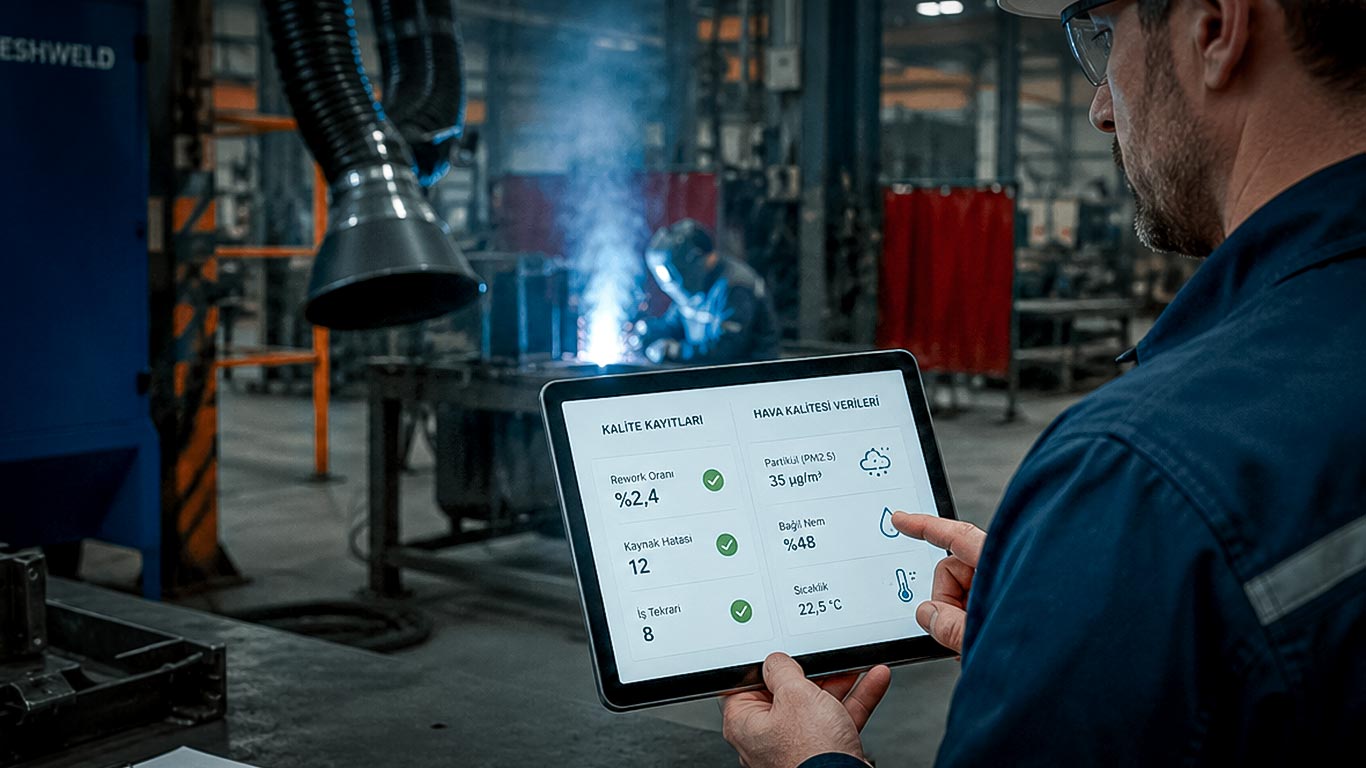
Hidden Causes of Rework Costs
In many welded fabrication facilities, high welding rework rates and rising rework costs are often associated with welder performance or equipment failures. While these are indeed among the most visible factors affecting weld quality, there are many cases where defect rates increase significantly even though the same equipment, welding procedures, and operators are being used.
This becomes particularly noticeable in defense manufacturing, energy equipment production, pressure vessel fabrication, heavy steel construction, and automotive projects. The cost of a welding defect extends far beyond repairing a weld bead. Rewelding operations, additional grinding, repeated non-destructive testing (NDT), and delayed deliveries can dramatically increase overall production costs.
What many manufacturers overlook is the production environment itself. Welding is a controlled energy transfer process. Arc behavior, weld pool stability, and shielding gas performance are not determined solely by machine settings. Air quality, humidity, temperature fluctuations, and airflow conditions within the workplace can also directly influence welding results.
Can the Production Environment Affect Weld Quality?
When quality issues are investigated, attention is often focused on the location where the defect appears. However, the conditions that create the defect do not always originate at the weld joint itself. In some cases, air currents within the production area disturb the shielding gas coverage. In others, dense welding fumes reduce the operator’s visibility. High humidity levels may also affect weld pool behavior and contribute to defects that become apparent later in the production process.
For this reason, advanced manufacturing facilities focus not only on welding procedures but also on the production environment as part of their welding quality control strategy. Environmental conditions are increasingly treated as an integral part of process control.
You may also find our article, “How to Measure Welding Fume Exposure? Methods, Exposure Limits, and Control Strategies”, useful:
https://www.freshweld.com.tr/en/article/how-to-measure-welding-fume-exposure/
| Image | Description |
 |
WELDING FUMESReduce visibility, lower operator performance, and increase the risk of defects. |
 |
HUMIDITY & TEMPERATUREHigh humidity increases the risk of hydrogen-related defects. Extremely hot or cold environments can negatively affect weld quality. |
 |
DUST & PARTICULATE CONTAMINATIONCan cause surface contamination and equipment wear while contributing to quality-related issues. |
 |
AIRFLOWDisrupts shielding gas coverage and makes weld pool protection more difficult. |
 |
INSUFFICIENT DATA ANALYSISWithout evaluating air quality data, the root causes of recurring defects may remain hidden. |
Welding Fumes and Quality Performance
Welding fumes are typically evaluated from an occupational health and safety perspective. However, one of the first factors affected by excessive fume generation is operator visibility.
When the weld pool cannot be clearly observed, it becomes more difficult for welders to accurately track the weld bead. Even minor visibility issues can influence welding quality, particularly during long welds, multi-pass applications, or work in difficult-to-access areas. Defects that initially go unnoticed may later require rework following visual inspections or NDT procedures.
The impact of welding fumes is not limited to manual welding. Fine metal particles generated during robotic welding operations can accumulate on sensors, laser tracking systems, and cameras, gradually affecting system performance. As a result, unexpected variations in weld quality may occur even when welding parameters remain unchanged.
Related Content
Balancing Extraction, Airflow, and Shielding Gas Performance
Ventilation systems, fans, open doors, and natural air movement are often considered ordinary parts of a manufacturing environment. However, in MIG/MAG and TIG welding applications, shielding gas behavior can be highly sensitive to environmental conditions.
When shielding gas fails to adequately protect the weld pool, porosity, oxidation, and fusion-related defects may occur. One of the most challenging aspects of these issues is that they often appear only under specific conditions rather than continuously. As a result, manufacturers may spend significant time investigating welding parameters while the actual cause is uncontrolled airflow within the production area.
In facilities producing large steel structures or operating high-capacity ventilation systems, the influence of airflow on welding performance should never be underestimated.
Related Content
Humidity and Temperature Control in Critical Manufacturing
Environmental conditions do not affect every production process to the same extent. Variables that may seem insignificant in basic steel fabrication can have serious consequences in high-quality manufacturing applications.
In industries such as defense, energy, and pressure vessel manufacturing, where high-strength steels are commonly used, humidity control becomes a critical parameter. Elevated humidity levels can increase hydrogen absorption in the welding zone and contribute to cracking in certain applications. One of the most challenging aspects of these defects is that they often appear after welding has been completed.
Similarly, extremely hot or cold working environments can influence weld behavior. For this reason, critical manufacturing operations strive to control not only welding procedures but also environmental conditions.
The Impact of Dust and Particulate Contamination on Quality
Many welded fabrication facilities also perform grinding, cutting, blasting, and CNC machining operations within the same production area. The fine particles generated by these processes can affect not only workplace cleanliness but also product quality.
Contaminants accumulating on component surfaces may reduce the quality of pre-weld preparation. Likewise, particulate buildup on sensitive equipment can shorten service life and increase maintenance requirements. In highly automated manufacturing facilities, the relationship between air quality and equipment performance is becoming increasingly important.
Related Content
- What Are the Health and Environmental Risks of Particulate Matter?
- Oil Mist and Micro-Fume Extraction in CNC Machining Centers
Evaluating Quality Records and Air Quality Data Together
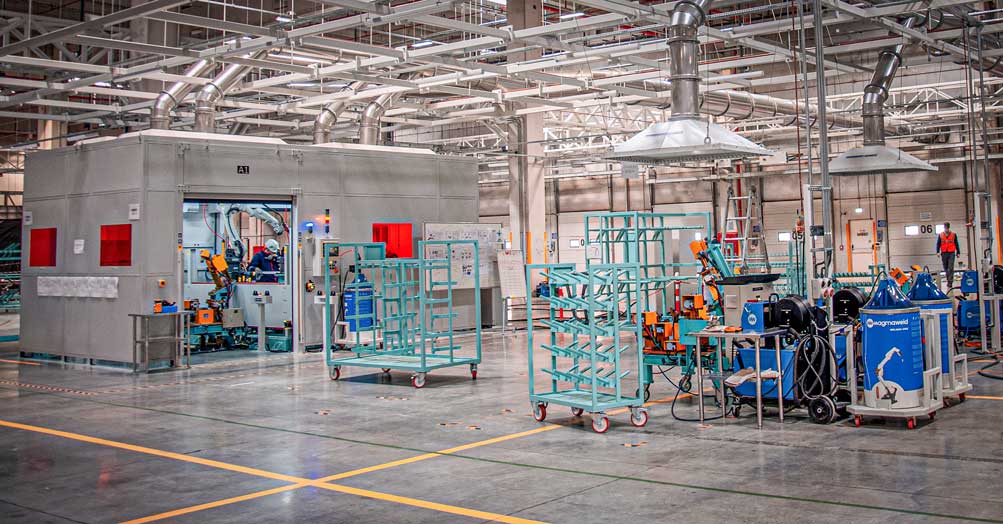
Many manufacturers track rework rates but rarely correlate this information with environmental conditions. Modern manufacturing practices increasingly emphasize evaluating quality indicators alongside process and workplace conditions.
Rising defect rates during specific periods may be linked to temperature fluctuations, declining filter performance, or areas with elevated welding fume concentrations. Understanding these relationships can help not only solve existing problems but also prevent future quality losses.
It is becoming increasingly difficult to separate production environment management from welding process management. Many of the factors influencing quality are directly related to workplace conditions rather than welding equipment alone.
Conclusion
In welded fabrication, increasing rework rates are not always caused by welding parameters or operator performance. Environmental factors such as air quality, welding fumes, humidity, temperature, and airflow can directly affect weld quality, rework rates, and production efficiency.
In industries with demanding quality requirements—including defense, energy, heavy industry, and pressure vessel manufacturing—environmental control is far more than an occupational safety issue. It is a strategic manufacturing practice that helps reduce quality costs, improve productivity, and lower rework rates.
The facilities that consistently achieve right-first-time welding are not simply those with skilled welders; they are the ones that successfully control all factors affecting the welding process.
Contact Our Technical Team and Let's Choose the Right Product TogetherFRESHWELD and Air Quality in Welded Fabrication Facilities
For more information about workplace air quality, welding fume control, and industrial filtration solutions, contact the FRESHWELD engineering team. We can help create a cleaner, more controlled production environment with solutions tailored to your welding processes, production volume, and facility requirements.
External Resources